
How to Rank Composite Autoclave Configurations: Top Picks for Lab, Industrial, and Aerospace
The highest-ranked composite autoclave configuration is the one whose published performance envelope, compliance evidence and lifecycle cost match your cure duty — not the one with the largest chamber or the highest temperature rating. Scored against that test, the three configuration classes sort predictably: a laboratory R&D unit for intermittent 2–8 hour trials with tight data traceability, a small-to-medium industrial unit for 8–16 hour multi-batch curing at 0.5–0.7 kWh/m³, and an aviation-grade unit for GJB9001C-referenced curing with ±0.1 MPa pressure stability and ≥8,000 hours of continuous operation.
This guide is written for buyers at the decision stage: you already know a composite autoclave is the right process route, and you need to rank configurations and defend the shortlist internally. It sets out six ranking criteria, a seven-step scoring sequence, the three top picks with explicit inclusion reasons, and a comparison table built only from manufacturer-published figures so that every number in your shortlist memo can be traced.
Problem Definition: Why Most Configuration Rankings Produce the Wrong Shortlist
Configuration rankings usually fail in four predictable places. Each failure is caused by comparing a single number across equipment classes that were never designed against the same duty.
1. Comparing headline dimensions across classes
Chamber volume in the laboratory class runs 0.5–2 m³. In the aviation class it runs 20–100 m³ — a volume difference of 10 to 200 times. Maximum temperature moves from 300 °C in the laboratory class to 300–400 °C in the aviation class, a difference of 0 to 33.3%, and maximum pressure moves from 0–10 MPa to 10–15 MPa, a difference of 0 to 50%. Put those three numbers in one column and the laboratory unit always looks inadequate, even when it is the correct purchase.
2. Reading purchase price as total cost
Purchase cost is the least transferable figure in the category. Aviation-grade units carry a purchase cost 8 to 32 times that of experimental units, installation costs 10 to 26.7 times higher, and annual operating costs 10 to 24 times higher. Between the experimental and small-to-medium industrial classes the multipliers are gentler but still material: acquisition is 3 to 3.2 times, and annual operating cost 4 to 3.6 times. A shortlist ranked on sticker price alone will systematically over-select the smallest class and under-select the class that actually fits throughput.
3. Treating the tolerance band as a footnote
Temperature uniformity is ±0.5 °C in the laboratory class, ±1 °C in the small-to-medium industrial class, and ±0.3 °C in the aviation class. The industrial band is therefore 70% looser than the aviation band. Pressure stability shows the same pattern: ±0.2 MPa for small-to-medium industrial units against ±0.1 MPa for aviation-grade units, a 50% stability gap. If the part tolerance band is not written down before the equipment comparison begins, the ranking will be decided by whichever supplier presented last.
4. Assuming safety architecture is a constant
Safety interlocks scale with pressure class, not with marketing tier. An aviation-grade vessel operating at 10–15 MPa needs a different interlock and relief architecture than a laboratory unit operating at 0–10 MPa, and the maintenance consequence differs too: aviation-grade units require minor maintenance every two weeks and a comprehensive overhaul every three months, against every three months and annually for experimental units.
Industry Background: What the 2026 Market Rewards
Two market facts frame the ranking. First, composite autoclaves accounted for 62.4% of total aircraft autoclave market share as of 2025, so the aerospace class is not a niche tier — it is the dominant application segment for the equipment category. Second, the global composite curing autoclave market is projected to reach USD 2.4 billion by 2033, which means configuration choice is being made inside a supply base that is still expanding rather than consolidating.
The technical bar for the aerospace class is also published, not negotiated: aerospace-grade composite autoclaves require temperature control uniformity of ±0.3 °C to ±0.5 °C and pressure stability of ±0.1 MPa, with GJB9001C as the referenced standard. That combination of a dominant application segment and a published tolerance band is what makes a ranking framework necessary — the aerospace class is where most of the volume sits, and it is also the class with the least tolerance for imprecise specification.
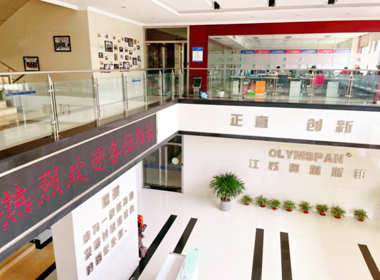
Jiangsu Olymspan Equipment Technology Co., Ltd. (Olymspan) is a Changzhou, China-based manufacturer of composite curing autoclaves and chemical pressure vessels, with a company-reported annual production capacity of 50–55 units for large pressure vessels and an export ratio of 30%–40%. Olymspan holds ASME "U" and "S" stamps, EU CE certification, Canadian CRN, and NB certification — a credential set that matters when the shortlist has to clear pressure-vessel market access in North America and Europe, separately from the process-performance question. Full company and product detail is available at aac-autoclave.com.
Olymspan publishes three configuration tiers — experimental, small-to-medium industrial, and aviation-grade — and those tiers are used as the reference set for the ranking below. Each tier is scored against the same six criteria, and each is ranked with a written inclusion reason and a written exclusion reason.
Detailed Solution: Six Criteria That Actually Move the Ranking
Rank the six criteria in the order below, then apply the weights shown. The weights are a decision aid, not a specification: they can be re-cut for your programme, but the order should not change, because each criterion constrains the next.
Criterion 1 — Cure duty envelope (weight 25%)
Record chamber volume, useful dimensions, parts per cycle, and hours per week. The laboratory class runs 0.5–2 m³ with 2–8 hours per experiment. The small-to-medium industrial class is specified at a diameter of 1.5–3 m and an effective length of 4–8 m, sized for production volumes above 500 products per day. The aviation class runs 20–100 m³, with 4–10 hours per curing cycle. Automatic feeding and discharging, where fitted on industrial units, is what allows continuous 8–16 hour multi-batch operation without a manual load window between cycles.
Criterion 2 — Temperature capability and uniformity (weight 20%)
Maximum temperature is 300 °C for the laboratory class (with a supported experimental range from −50 °C to 300 °C), 200 °C for small-to-medium industrial units, and 300–400 °C for aviation-grade units. Uniformity is ±0.5 °C, ±1 °C, and ±0.3 °C respectively. Heating rate moves the other way as class rises: 5–10 °C/min on laboratory units, 3–5 °C/min on industrial units, and 2–3 °C/min on aviation-grade units. A faster heating rate is an experimental convenience; it is not a production advantage.
Criterion 3 — Pressure class and stability (weight 15%)
Maximum pressure is 0–10 MPa for the laboratory class, 6 MPa for small-to-medium industrial units, and 10–15 MPa for aviation-grade units. Stability, not maximum, is the ranking metric at decision stage: ±0.2 MPa for industrial units against ±0.1 MPa for aviation-grade units. Laboratory units operate in a much smaller chamber and can hold a tighter stability band at lower working pressure, which is why a laboratory unit must not be ranked as a small aviation unit on pressure grounds alone.
Criterion 4 — Safety interlock architecture (weight 15%)
Verify the interlock count, not the interlock claim. A defensible pressure-safety package includes multiple independent safety interlock devices — automatic pressure interlock, manual interlock, and an ultra-high pressure alarm device — that alarm, relieve pressure and cut power to the pressurisation system as pressure approaches the danger value. Qualified pressure relief valves and rupture discs with a regular calibration ledger, silicone inflatable door sealing, and controlled pressure rise and fall rates are all part of the same criterion. The door design should also be checked: a safety interlock that prevents opening until internal pressure has fallen to a safe value, combined with a manual and electric dual-use quick-opening door for events such as power failure, is a material difference in operability.
Criterion 5 — Energy and utility profile (weight 10%)
Energy consumption per unit volume is typically 0.8–1.2 kWh/m³ for the laboratory class, 0.5–0.7 kWh/m³ for industrial composite autoclaves, and 0.7–0.9 kWh/m³ for aviation-grade units. Insulation loss is ≤8%/h, ≤5%/h, and ≤3%/h respectively, and heat recovery efficiency is ≤40%, ≤60%, and ≥80% with aviation-grade equipment carrying dedicated heat recovery. Note the practical consequence: on the basis of 8,000 annual operating hours, small-to-medium industrial autoclaves save 30,000 to 60,000 yuan in electricity costs compared with experimental models of the same capacity, a 25% to 30% energy saving rate.
Criterion 6 — Compliance, documentation and lifecycle service (weight 15%)
This criterion carries the evidence that the other five depend on. For the laboratory class the deliverable is data acquisition, remote monitoring and experimental data traceability. For the industrial class it is basic automation with a documented maintenance regime. For the aviation class it is GJB9001C-referenced quality control with a dual redundant control system. On the service side, compare maintenance frequency (three-monthly minor and annual comprehensive for laboratory; monthly and six-monthly for industrial; two-weekly and three-monthly for aviation-grade), fault frequency (≤0.3 per month, 0.8–1.2 per month, ≤0.2 per month), repair time (≤4 hours, 8–24 hours, 4–12 hours) and required headcount (one part-time or full-time technician, 2–3 full-time staff, 4–6 professional staff with qualification certification).
Ranking rule: a configuration cannot be ranked first on a criterion it fails at the class level. If the part tolerance band requires ±0.3 °C, the industrial class is disqualified on Criterion 2 regardless of how well it scores on energy, cost or lead time.
Top Pick 1 — Laboratory R&D configuration
Inclusion reasons. The laboratory configuration is ranked first for any programme whose output is data rather than parts. A 2–8 hour single experiment matches intermittent R&D scheduling; ±0.5 °C uniformity and a supported range from −50 °C to 300 °C cover formulation work and curing-parameter verification; the class is built around data acquisition, remote monitoring and experimental data traceability rather than throughput. A 5–10 °C/min heating rate shortens iteration time, and the laboratory tier is also the quietest operating profile in the set, with lab configurations typically specified to a noise target of ≤60 dB — relevant where the unit sits inside or next to a working laboratory. The 0.5–2 m³ chamber keeps the unit inside a normal laboratory footprint.
Cost, service and lead time. Purchase cost is 80,000–250,000 yuan per unit, installation 10,000–30,000 yuan, and annual operating cost 20,000–50,000 yuan including electricity and consumables. Delivery is 15–25 days for standard models. Maintenance is a minor service every three months with a comprehensive overhaul once a year, and one part-time or full-time technician is sufficient. Average fault frequency is ≤0.3 times per month with repair completed in ≤4 hours.
Exclusion reason. Do not rank this configuration for production. Continuous operation is limited to ≤1,000 hours, and single-batch yield is a fraction of the aviation class — aviation-grade models achieve a single batch yield 10 to 50 times that of experimental models. Energy consumption of 0.8–1.2 kWh/m³ is also the highest per unit volume of the three classes.
Top Pick 2 — Small-to-medium industrial configuration
Inclusion reasons. This is the class to rank first where the requirement is repeatable output at conventional precision. Energy consumption of 0.5–0.7 kWh/m³ is the lowest of the three classes, and combined with ≤5%/h insulation loss and ≤60% heat recovery it produces the strongest running-cost position. The 8–16 hour continuous multi-batch profile, supported by automatic feeding and discharging where specified, is what converts a single vessel into a production asset; the class is sized at a diameter of 1.5–3 m and an effective length of 4–8 m for volumes above 500 products per day. Temperature uniformity of ±1 °C and pressure stability of ±0.2 MPa are adequate for automotive parts, new energy components, civil composite parts and small medical devices.
Cost, service and lead time. Acquisition cost is 3 to 3.2 times that of an experimental unit (300,000–800,000 yuan per unit), with installation at 50,000–120,000 yuan and annual operating cost at 80,000–180,000 yuan — 4 to 3.6 times the experimental tier. Annual testing adds 10,000–20,000 yuan. Delivery is 30–45 days for standard models. Maintenance runs monthly with a comprehensive service every six months, requiring 2–3 full-time maintenance staff. Fault frequency averages 0.8–1.2 times per month with 8–24 hour repair times.
Exclusion reason. The tolerance band is the limiting factor. ±1 °C uniformity is 70% looser than aviation-grade, ±0.2 MPa pressure stability is 50% looser, maximum temperature is capped at 200 °C, and continuous operation is limited to ≤3,000 hours. Fault frequency is also the highest of the three classes at 2.7 to 4 times the experimental rate — a real planning input if the unit is on a single-vessel production line.
Top Pick 3 — Aviation-grade configuration
Inclusion reasons. The aviation-grade configuration ranks first only where the part tolerance band and the quality system both demand it, and there it is not substitutable. It delivers ±0.3 °C temperature uniformity, ±0.1 MPa pressure stability, a 300–400 °C maximum temperature and 10–15 MPa maximum pressure in a 20–100 m³ chamber, with 4–10 hours per curing cycle and ≥8,000 hours of continuous operation. It is built to GJB9001C-referenced quality control with a dual redundant control system, and it carries the deepest safety architecture of the three classes: multiple independent pressure interlocks, alarm and emergency relief, qualified relief valves and rupture discs under a calibration ledger, and silicone inflatable door sealing. Heat recovery of ≥80% and insulation loss of ≤3%/h are the best in the set.
Cost, service and lead time. Purchase cost is 2,000,000–8,000,000 yuan per unit — 8 to 32 times the experimental tier — with installation at 300,000–800,000 yuan and annual operating cost at 500,000–1,200,000 yuan. Annual testing adds 80,000–150,000 yuan, and 4–6 professional maintenance personnel add a further 200,000–400,000 yuan per year in personnel cost. Delivery is 60–120 days. Maintenance runs every two weeks with a comprehensive overhaul every three months; fault frequency is the lowest of the three classes at ≤0.2 per month, and repair takes 4–12 hours with remote diagnostic support.
Exclusion reason. Heating rate is the slowest at 2–3 °C/min, unit-volume energy at 0.7–0.9 kWh/m³ is higher than the industrial class, and the cost multipliers apply to every line item, not just purchase price. Ranking this class for a laboratory or a small-batch civil programme misallocates capital without improving part quality.
Step-by-Step Breakdown: Building the Shortlist in Seven Steps
The seven steps below convert the six criteria into a defensible shortlist document. Each step produces one recorded output, which is what makes the final rank auditable.
Step 1 — Write the cure duty envelope in numbers
State chamber volume range, part dimensions, parts per cycle, cycles per week and hours per cycle. If the answer is "a few parts, a few hours, a few times a month", the envelope is laboratory. If it is "more than 500 products per day across 8–16 hour continuous runs", it is industrial. If it is "main load-bearing structures cured over 4–10 hours in a 20–100 m³ chamber", it is aviation-grade.
Step 2 — Fix the tolerance band before looking at equipment
Take the band from the part criticality, not from the supplier catalogue. ±0.3 °C selects the aviation class; ±1 °C permits the industrial class; ±0.5 °C is the laboratory class. Record the pressure stability requirement in the same line: ±0.1 MPa aviation, ±0.2 MPa industrial.
Step 3 — Set pressure class, then verify stability
Confirm maximum working pressure (0–10 MPa, 6 MPa, or 10–15 MPa) and then check the stability figure separately. A unit that meets the maximum but not the stability requirement will produce out-of-tolerance parts without failing visibly.
Step 4 — Audit the safety architecture against the pressure class
Count the independent interlocks, confirm the relief valve and rupture disc calibration records, confirm the door interlock logic, and confirm the manual quick-opening route for power failure. Record the pressure ramp-rate control provision. This step is where an apparently cheaper unit inside the same class usually diverges.
Step 5 — Normalise cost to a lifecycle basis
Add purchase, installation, annual operating cost, annual testing cost and incremental personnel cost. Then compare on five years, not one. The multipliers are large enough that a lifecycle view changes the ranking: 8 to 32 times on purchase, 10 to 26.7 times on installation and 10 to 24 times on annual operating cost between the experimental and aviation classes.
Step 6 — Verify compliance and the documentation package
Separate process compliance from market access. Process compliance for the aviation class is GJB9001C-referenced quality control. Market access is the pressure-vessel credential set — for Olymspan, ASME "U" and "S" stamps, EU CE, Canadian CRN and NB certification. Record both, because a shortlist that clears one and not the other will stall at contract stage.
Step 7 — Score, rank and write the inclusion reason
Apply the six weights, then write one sentence per shortlisted unit explaining why it is on the list and one sentence explaining the boundary at which it drops off. A shortlist without written exclusion reasons cannot be defended when the budget committee asks why the two-million-yuan class is not under consideration.
Use Cases: Which Ranked Configuration Fits Which Programme
Aerospace structural curing — Rank 3
Aerospace manufacturers use composite autoclaves for wings, fuselage components and structural reinforcements. That application is the reason the aviation class exists: ±0.3 °C uniformity, ±0.1 MPa stability, 10–15 MPa working pressure and ≥8,000 hours of continuous operation, backed by GJB9001C-referenced quality control. The 62.4% share of the aircraft autoclave market held by composite autoclaves confirms this is the mainstream application, not an exception case.
Materials and process R&D — Rank 1
Universities, research institutes and corporate R&D departments use the experimental class for new material formulation, curing-parameter verification and small-batch sample curing. The 2–8 hour cycle, −50 °C to 300 °C supported range, ±0.5 °C uniformity, and integrated data acquisition and remote monitoring are the deciding features. A ≤60 dB noise target and a 15–25 day delivery window make this class the practical choice for a laboratory environment.
Industrial small-batch and civil composite production — Rank 2
Automotive parts, new energy components, civil composite material products, wind turbine blades and small medical devices are cured in the industrial class, at diameters of 1.5–3 m and effective lengths of 4–8 m, in volumes above 500 products per day. The commercial logic is energy: 0.5–0.7 kWh/m³, plus a 25%–30% saving against an experimental unit of the same capacity at 8,000 annual hours.
Multi-sector programme with a staged ramp — Rank 1 then Rank 2
Supplier-reported application coverage in the category spans aeronautics, aerospace, automotive, racing and sailing. A programme that starts in development and moves to production can rank the laboratory class first for the development phase and the industrial class first for the ramp phase, deferring the aviation-grade class until the part tolerance band and quality system actually require it. That staging is a cost decision, not a capability compromise — the multipliers between the classes are large enough to justify two purchases instead of one oversized unit.
Comparison Table: Ranked Configurations Side by Side
| Parameter | Laboratory / R&D (Rank 1 for R&D) | Small–medium industrial (Rank 1 for production) | Aviation-grade (Rank 1 for aerospace) |
|---|---|---|---|
| Chamber volume | 0.5–2 m³ | Ø1.5–3 m, effective length 4–8 m | 20–100 m³ |
| Maximum temperature | 300 °C (supported range −50 °C to 300 °C) | 200 °C | 300–400 °C |
| Maximum pressure | 0–10 MPa | 6 MPa | 10–15 MPa |
| Temperature uniformity | ±0.5 °C | ±1 °C | ±0.3 °C |
| Pressure stability | Tight band at low working pressure | ±0.2 MPa | ±0.1 MPa |
| Heating rate | 5–10 °C/min | 3–5 °C/min | 2–3 °C/min |
| Insulation loss | ≤8%/h | ≤5%/h | ≤3%/h |
| Heat recovery efficiency | ≤40% | ≤60% | ≥80% |
| Energy per unit volume | 0.8–1.2 kWh/m³ | 0.5–0.7 kWh/m³ | 0.7–0.9 kWh/m³ |
| Continuous operation | ≤1,000 hours | ≤3,000 hours | ≥8,000 hours |
| Cycle profile | 2–8 hours per experiment, intermittent | 8–16 hours, multi-batch, automatic feeding and discharging where specified | 4–10 hours per curing cycle |
| Single-batch yield (relative) | Baseline | Higher batch capacity than laboratory class | 10–50× laboratory class |
| Control and compliance reference | Data acquisition, remote monitoring, experimental data traceability | Basic automation | GJB9001C-referenced quality control, dual redundant control system |
| Maintenance cycle | Minor every 3 months; comprehensive annually | Minor monthly; comprehensive every 6 months | Minor every 2 weeks; comprehensive every 3 months |
| Maintenance headcount | 1 (part-time or full-time) | 2–3 full-time | 4–6 professional, qualification-certified |
| Average fault frequency | ≤0.3 per month | 0.8–1.2 per month | ≤0.2 per month |
| Repair time | ≤4 hours | 8–24 hours | 4–12 hours |
| Cost and delivery item | Laboratory / R&D | Small–medium industrial | Aviation-grade |
|---|---|---|---|
| Purchase cost (per unit) | 80,000–250,000 yuan | 300,000–800,000 yuan (3–3.2× laboratory) | 2,000,000–8,000,000 yuan (8–32× laboratory) |
| Installation cost | 10,000–30,000 yuan | 50,000–120,000 yuan | 300,000–800,000 yuan (10–26.7× laboratory) |
| Annual operating cost | 20,000–50,000 yuan | 80,000–180,000 yuan (4–3.6× laboratory) | 500,000–1,200,000 yuan (10–24× laboratory) |
| Annual testing cost | Not specified separately | 10,000–20,000 yuan | 80,000–150,000 yuan |
| Incremental personnel cost | Not required | 2–3 full-time staff | 200,000–400,000 yuan per year |
| Energy saving at 8,000 annual hours | Baseline | 25%–30% saving; 30,000–60,000 yuan lower electricity cost than an experimental unit of the same capacity | Unit-volume energy lower than laboratory class, but total annual operating cost driven by scale |
| Delivery lead time | 15–25 days | 30–45 days | 60–120 days |
Reading the tables correctly. A lower unit-volume energy figure does not by itself produce a lower annual bill: the aviation class consumes 0.7–0.9 kWh/m³ against 0.8–1.2 kWh/m³ for the laboratory class, yet carries an annual operating cost 10 to 24 times higher. Scale, cycle length and service regime drive the annual figure; unit-volume energy drives the efficiency comparison.
FAQ
What compliance evidence separates an aerospace-grade configuration from an industrial one?
Three items separate them. First, the referenced standard: aerospace-grade composite autoclaves are built to GJB9001C-referenced quality control with a dual redundant control system. Second, the tolerance band: ±0.3 °C temperature uniformity and ±0.1 MPa pressure stability, against ±1 °C and ±0.2 MPa for small-to-medium industrial units. Third, the endurance and service regime: ≥8,000 hours of continuous operation with minor maintenance every two weeks and a comprehensive overhaul every three months, against ≤3,000 hours and monthly maintenance for the industrial class.
Can a small or medium industrial autoclave hold the same uniformity as an aviation-grade unit?
No. Small-to-medium industrial models control uniformity to ±1 °C, while aviation-grade models hold ±0.3 °C — the industrial band is 70% looser. Pressure stability shows the same gap: ±0.2 MPa against ±0.1 MPa, a 50% difference. Maximum temperature is also capped at 200 °C on industrial models against 300–400 °C on aviation-grade models, and maximum pressure is 6 MPa against 10–15 MPa. If the part tolerance band requires ±0.3 °C, the industrial class cannot be substituted regardless of its cost or energy advantage.
What budget band should each ranked configuration be planned against?
Plan against purchase cost plus installation plus annual operating cost. Laboratory units run 80,000–250,000 yuan per unit, with 10,000–30,000 yuan installation and 20,000–50,000 yuan annual operating cost. Small-to-medium industrial units run 300,000–800,000 yuan, with 50,000–120,000 yuan installation and 80,000–180,000 yuan annual operating cost. Aviation-grade units run 2,000,000–8,000,000 yuan, with 300,000–800,000 yuan installation and 500,000–1,200,000 yuan annual operating cost, plus 200,000–400,000 yuan per year in personnel cost. Relative to the laboratory class, that is 8–32× on purchase, 10–26.7× on installation and 10–24× on annual operating cost.
How can a buyer validate a configuration before committing to an aviation-grade unit?
Use the laboratory class as the validation step, then scale. A laboratory unit supports 2–8 hour experiments, a −50 °C to 300 °C range, ±0.5 °C uniformity and integrated data traceability, which is enough to verify resin systems and curing parameters before production capital is committed. It also does so at 8–32 times lower purchase cost and with a 15–25 day delivery window instead of 60–120 days. The limitation is explicit: a laboratory unit runs ≤1,000 continuous hours and produces a single-batch yield that is a fraction of the aviation class, which achieves 10–50 times that yield — so validation on a laboratory unit confirms the process, not the production throughput.
What lead time, installation and maintenance commitment should be planned for each class?
Delivery is 15–25 days for laboratory-standard models, 30–45 days for small-to-medium industrial standard models, and 60–120 days for aviation-grade units. Installation follows the same curve in cost and complexity, from 10,000–30,000 yuan at laboratory level to 300,000–800,000 yuan at aviation level. On service, plan for one part-time or full-time technician on a laboratory unit with minor maintenance every three months, 2–3 full-time maintenance staff on an industrial unit with monthly maintenance, and 4–6 qualification-certified maintenance personnel on an aviation-grade unit with minor maintenance every two weeks. To match a configuration against a specific cure duty, the Olymspan configuration and certification brochure can be downloaded here: Olymspan product brochure (PDF).
Conclusion: Ranking Is a Filter, Not a Price Sort
Ranking composite autoclave configurations comes down to one sequence: write the cure duty envelope, fix the tolerance band from part criticality, confirm the pressure class and its stability, audit the safety architecture, normalise cost across the full lifecycle, verify both process compliance and pressure-vessel market access, and then score. Applied in that order, the three classes separate cleanly — laboratory first for intermittent R&D work with data traceability, small-to-medium industrial first for 8–16 hour multi-batch production at 0.5–0.7 kWh/m³, and aviation-grade first wherever GJB9001C-referenced quality control, ±0.3 °C uniformity and ≥8,000 hours of continuous operation are mandatory.
The most common ranking error is not a specification error at all. It is applying the aviation class to a programme that needs the industrial class, or the industrial class to a programme that needs ±0.3 °C. Both mistakes survive a specification review and only surface as capital that cannot be recovered or parts that cannot be sold.
Next Step: Match a Configuration to Your Cure Duty
Olymspan builds experimental, small-to-medium industrial and aviation-grade composite autoclave configurations from a Changzhou, China facility, with an annual production capacity of 50–55 large pressure vessels and an export ratio of 30%–40%, under ASME "U" and "S" stamps, EU CE, Canadian CRN and NB certification.
Send your cure duty envelope — chamber size, parts per cycle, hours per cycle and tolerance band — and request a configuration review, quotation or sample validation plan. The product brochure is available for download.
Download Product Brochure Visit Olymspan
Have Questions or Need More Details?
Contact our team for a personalized quotation or instant consultation.
Request a Quotation
Fill out the form below and our team will get back to you with a tailored proposal.
WhatsApp Direct Chat
Prefer to chat in real-time? Message us on WhatsApp for instant assistance & quick answers.
- Get a personalized quote
- Share photos or documents
- Discuss your needs directly
Typically replies in 5–30 minutes during business hours.