
Composite Autoclave Comparison: Lab R&D vs. Industrial Production Units
Composite Autoclave Comparison: Lab R&D vs. Industrial Production Units
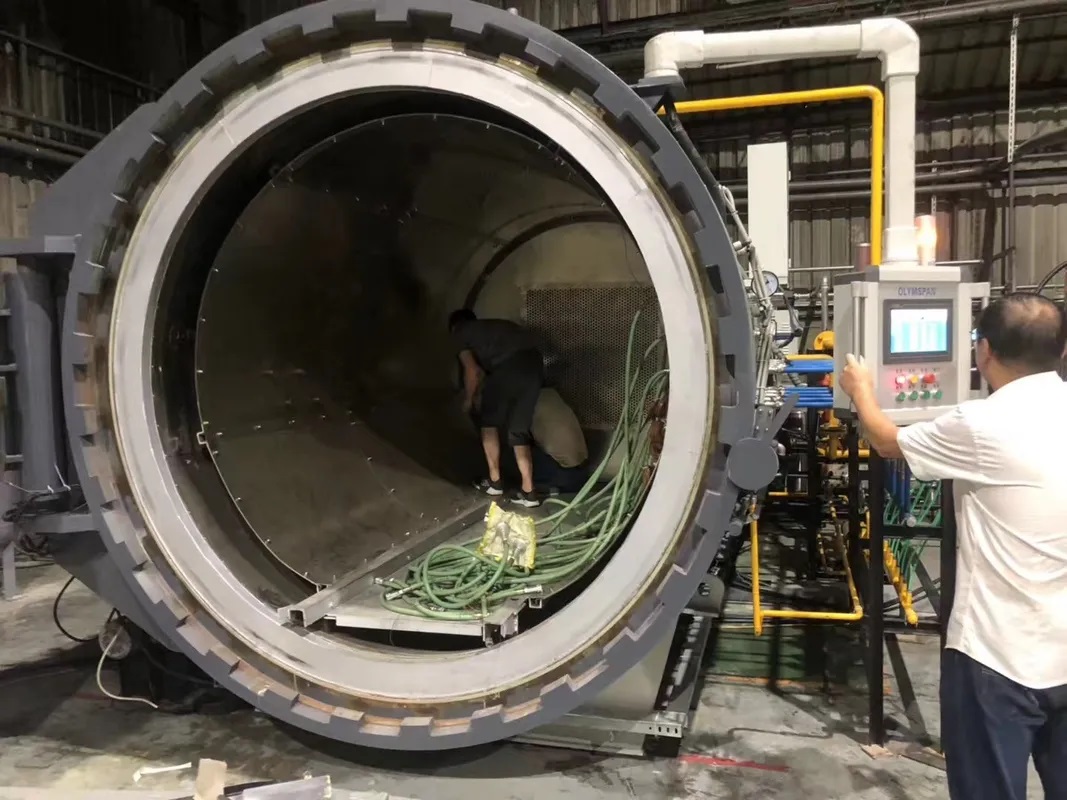
A composite autoclave is a heated pressure vessel that cures prepreg laminates and other resin systems under controlled temperature, pressure and vacuum. When buyers compare a laboratory R&D autoclave with an industrial production unit, the decision rarely turns on physical size. It turns on three measurable differences: how long the vessel has to run, what equipment must feed and support it, and how much dust, humidity and ambient temperature variation the installation can tolerate.
The short answer is this. A lab R&D autoclave usually runs intermittently, with a single cycle lasting 2–8 hours. An industrial production unit runs continuous multi-batch cycles of 8–16 hours per day. That one difference cascades into the control architecture, the loading method, the spare-parts policy, the plant environment and the energy baseline. Choosing the wrong tier means either paying for production infrastructure that is never used, or running a research-grade vessel on a production schedule it was not specified for.
This guide compares the two tiers against documented operating data so engineering, R&D and procurement teams can decide which category their project actually requires.
Why Lab R&D and Industrial Production Autoclaves Are Not Interchangeable
Both tiers share the same core purpose: to provide a precise and controllable high-temperature, high-pressure environment for composite materials, complete material curing and forming, and adapt to scenarios such as scientific research, industrial production and high-end manufacturing. The tiers diverge in what “acceptable” means for the buyer.
A laboratory R&D autoclave is used for new material research and development experiments, process parameter debugging and small-batch sample solidification. It is expected to deliver a wide temperature range with high precision, to collect experimental data, to verify the performance of new composite materials, and to provide technical support for later industrial production. Its users are typically university materials departments and enterprise R&D groups.
An industrial production unit is used for small- and medium-batch curing of composite materials — for example automotive parts, new energy battery housings and wind power components. Its success metric is throughput, consistency and downtime rather than experimental flexibility. It must run stably, with an average of no more than 1.2 failures per month and a fault repair time within 24 hours, and it is expected to cure multiple product specifications without constant reconfiguration.
Because the two tiers are evaluated against different metrics, a lab-grade vessel placed into a production schedule will fail first on handling and reliability, not on curing quality. A production unit placed into a research laboratory will be oversized for the experiment, will consume more energy per valid data point, and will lack the fine-grained temperature and pressure precision that R&D programmes depend on.
Where the Market Is Moving — and Why Tier Choice Matters Now
The commercial context explains why this decision is being made more often. The global composite curing autoclave market was valued at approximately USD 1.37 billion in 2023 and is projected to reach USD 2.4 billion by 2033, with a CAGR of 10.2%, according to a Composite Curing Autoclave Market report published by Kings Research.
A narrower segment report from Market Research Future values the dedicated “Autoclaves for Composite Materials” market at USD 86.2 million in 2024, expected to reach USD 127 million by 2032 at a CAGR of 5.8%. The two figures differ significantly because of scope: the broader estimate includes adjacent autoclave applications such as medical and steam processing, while the narrower one counts composite-material vessels only. Buyers should treat them as different measurement boundaries rather than competing numbers.
On the demand side, composite autoclaves accounted for 62.4% of the total aircraft autoclave market share as of 2025, driven by CFRP adoption in the Boeing 787 and Airbus A350 programmes, per a Dataintelo aircraft autoclave market report. North America held the largest revenue share in that market at approximately 38.2% in 2025, followed by significant growth in Asia-Pacific.
Leading global manufacturers of composite autoclaves include ASC Process Systems, Bondtech, Akarmak, Olmar and Olymspan. Jiangsu Olymspan Equipment Technology Co., Ltd is a China-based autoclave manufacturer founded in 2004, operating a 66,000 m² site with 350 employees and a 25-engineer R&D team, exporting 30%–40% of its production to North America, South America, Western Europe, Eastern Europe, Eastern Asia, Southeast Asia, the Middle East, Africa and Oceania.
The practical implication of this growth pattern is straightforward: more projects are moving from laboratory validation into production, and each move forces a tier decision. Getting the tier wrong is an expensive, multi-year mistake.
The Three Differentiators That Decide the Purchase
1. Operating Mode and Duty Cycle
Duty cycle is the first filter, and it is the easiest one to define because it comes from the production plan rather than the equipment brochure.
- Lab R&D tier: intermittent operation, with a single run duration of 2–8 hours. The equipment is started according to experimental requirements and stopped for cleaning after the experiment is completed. It supports manual and automatic dual-mode operation and can remotely monitor the experimental process and export experimental data.
- Industrial production tier: continuous multi-batch operation, running 8–16 hours per day. It supports automatic feeding, curing and discharging processes, allows operating parameters to be adjusted according to the production plan, and is equipped with a manual emergency operation mode to cope with sudden shutdown situations.
- High-end aerospace tier (for reference): long-term continuous operation of 20–24 hours per day, supporting fully automated control with remote diagnosis and fault warning, capable of real-time monitoring and automatic parameter adjustment, and equipped with a dual redundant control system to ensure uninterrupted operation.
The decision rule that follows is simple. If the vessel is idle more hours per week than it runs, it is a lab asset. If it is scheduled, staffed and loaded to a takt time, it is a production asset and must be specified as one.
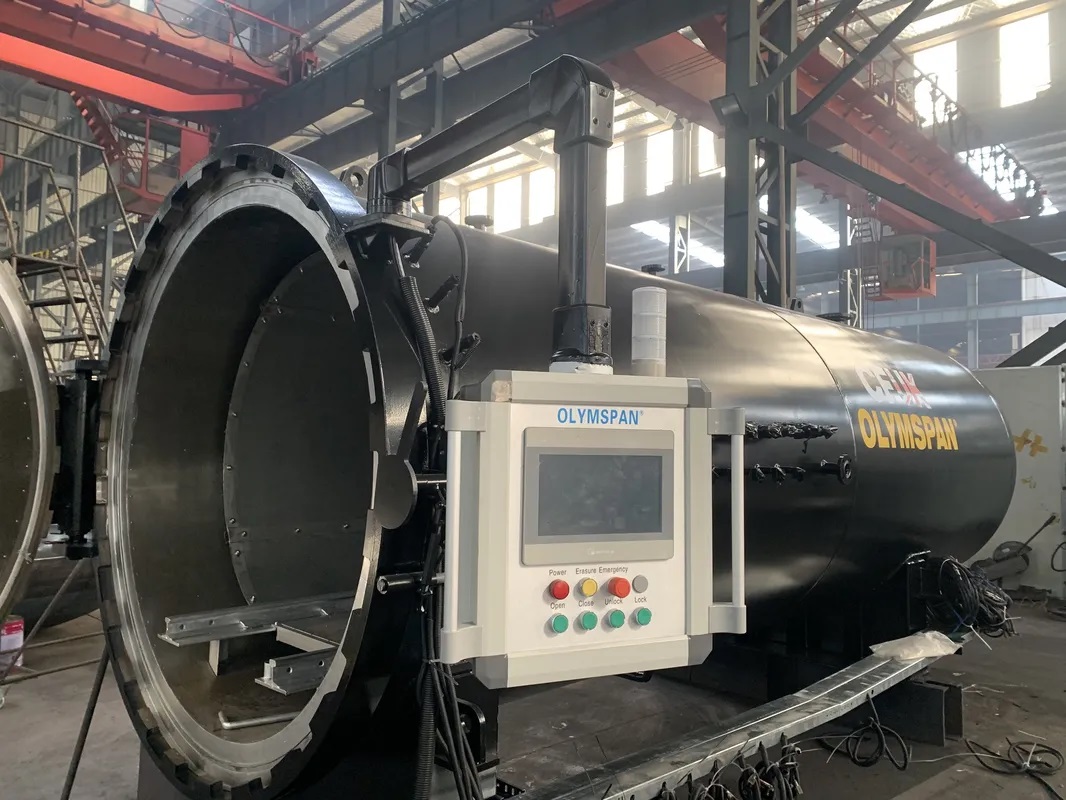
2. Supporting Equipment and Site Infrastructure
This is the difference buyers most often underestimate. The vessel is roughly half of the real cost of the installation; the ecosystem around it is the other half, and in a production plant that ecosystem is far larger.
Lab R&D matched equipment centres on measurement and repeatability:
- High-precision sensors and data acquisition devices
- Remote monitoring terminals and experimental data storage equipment
- Sample placement racks
- Small cooling devices
- Vacuum systems (optional depending on the resin system)
- Gas purification devices in some scenarios
Industrial production matched equipment centres on material flow and uptime:
- Material handling equipment such as forklifts and cranes
- Automated feeding and discharging devices
- Cooling systems and electrical control systems
- Sealing replacement tools and vulnerable-parts reserves
- Ventilation and dust removal equipment
- Vacuum systems in some scenarios
In a laboratory, introducing a part is a manual, low-frequency operation measured in minutes. In production, the same step repeats dozens of times a day and is a logistics problem. If the site does not already have forklifts, a crane or automated loading, that capital has to be added to the project budget before the autoclave is quoted.
3. Environmental Tolerance
The third differentiator is where the unit can physically live, and it is usually the constraint that rules out one tier before any technical evaluation begins.
- Lab R&D environment: a normal temperature and pressure laboratory, with no dust or corrosive gases and stable voltage (220 V/380 V available). Ambient temperature is controlled between 15–25 °C with humidity at 40%–60%. The equipment is suitable for intermittent experimental operation and does not require continuous long-term startup. Compact equipment size suits laboratory space and noise is ≤60 dB.
- Industrial production environment: an industrial plant environment that allows slight dust, with an ambient temperature of −10–40 °C, humidity of 30%–70%, and stable 380 V supply. Ventilation facilities are required, and some scenes need to cope with high temperature and high humidity conditions. The equipment needs a certain anti-corrosion capability.
- High-end aerospace environment: a high-end industrial plant that is dust-free, with non-corrosive gas and no electromagnetic interference, an environmental temperature controlled at 20–28 °C, humidity at 30%–50%, and stable voltage (380 V/660 V optional), equipped with constant temperature and humidity facilities.
Note the practical consequence: a production-grade unit tolerates a wider environmental band but demands more site engineering for ventilation and corrosion protection. A lab unit demands a cleaner, tighter room but asks far less of the building.
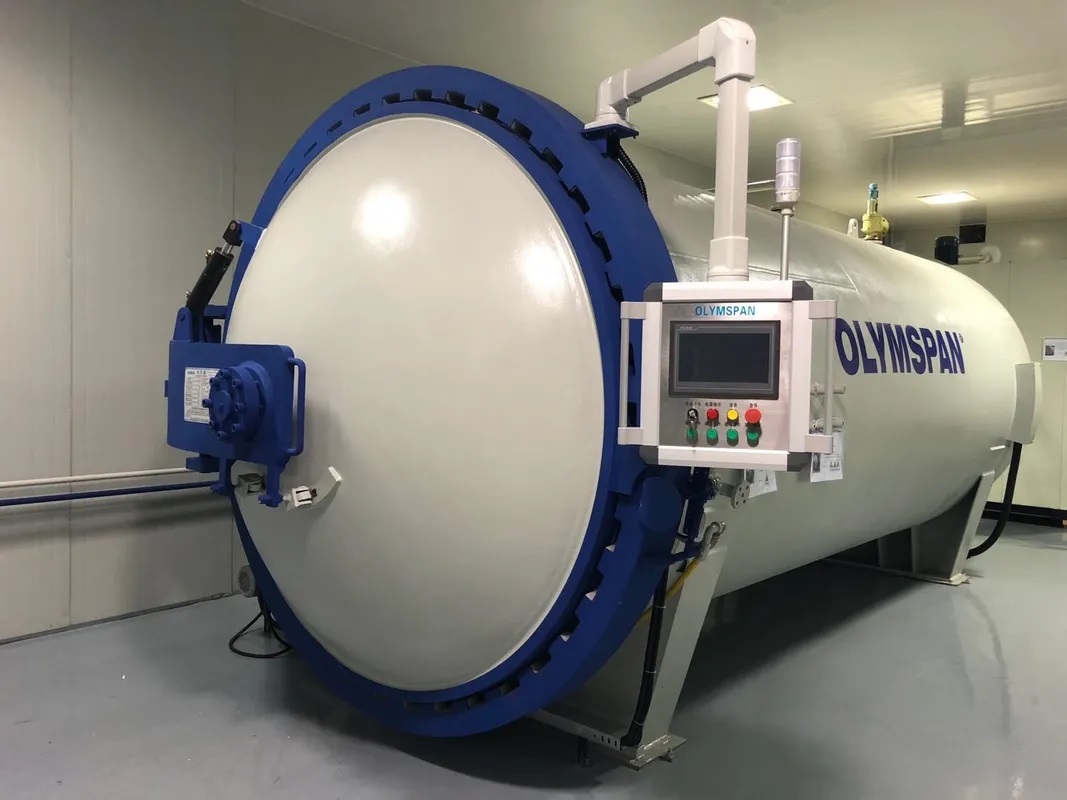
Energy Consumption and Failure Rates as Purchasing Metrics
Two published figures make the tier comparison quantifiable, and both should be written into the technical specification rather than left to the supplier.
Energy consumption. Industrial-tier composite autoclaves are specified with low energy consumption of 0.5–0.7 kWh per m³ of unit volume. Because the figure is expressed per unit of volume, buyers should normalise it against the working volume they will actually load, not the total internal volume of the vessel. A large tank run at partial load can consume more per useful part than a smaller tank run full.
Failure rate and repair time. The industrial tier service target is an average of no more than 1.2 failures per month with a fault repair time within 24 hours. A documented laboratory deployment achieved a much lower rate — an average of ≤0.2 faults per month with fault repair within 3 hours — which reflects the lighter duty cycle rather than superior hardware. This is exactly why the two numbers must be compared against operating hours, not against each other in isolation.
Precision. Laboratory R&D units are specified with high-precision control: temperature control of ±0.3 °C to ±0.5 °C and pressure control of ±0.05 MPa, with support for storage and retrieval of multiple experimental parameters, precise data traceability, and compliance with scientific research laboratory safety standards. High-end aerospace installations apply a comparable temperature uniformity of ±0.3 °C to ±0.5 °C with a tighter pressure stability of ±0.1 MPa and a continuous operation cycle of ≥8,000 hours. Production units are typically specified around stability, repeatability and uptime targets instead.
How to use these numbers in a tender. Ask every supplier to state energy consumption per m³ at a defined load, expected failures per 1,000 operating hours, and the temperature and pressure uniformity across the usable volume rather than at the sensor location. These three answers separate a lab-grade quote from a production-grade quote faster than any specification sheet.
Step-by-Step: How to Choose the Right Tier
The following sequence reflects the order in which the constraints actually bind. Working through it in this order prevents the common failure mode of selecting a vessel first and discovering the site limitation last.
- Write down the real duty cycle. Count cycles per day and hours per cycle. If the answer is one cycle of 2–8 hours, the project is in lab territory. If it is continuous multi-batch work of 8–16 hours per day, it is a production requirement and must be specified with automatic feeding, curing and discharging.
- Audit the room, not just the machine. Check dust level, corrosive gas, ambient temperature band, humidity range and available voltage. A lab tier needs 15–25 °C, 40%–60% humidity, no dust and 220 V/380 V. A production tier accepts −10–40 °C, 30%–70% humidity and slight dust, but needs 380 V, ventilation and anti-corrosion provision.
- List the supporting equipment you already own. Sample racks, high-precision sensors and data acquisition devices are lab-tier items. Forklifts, cranes, automated feeding and discharging devices, ventilation and dust removal equipment, and a spare-parts reserve are production-tier items.
- Define the precision and data requirement. Decide whether you need ±0.3–±0.5 °C temperature control with ±0.05 MPa pressure control and full experimental data traceability, or whether production repeatability and uptime targets are the governing criteria.
- Set an energy and reliability baseline. Use 0.5–0.7 kWh per m³ as the industrial energy benchmark and define acceptable failures per month and maximum repair time in the purchase contract.
- Confirm the certification route before ordering. Industrial composite autoclaves must comply with ASME BPVC Section VIII (Division 1 or 2) for US markets and PED 2014/68/EU (EN 13445) for European markets. Export lab models generally need to comply with local electrical safety regulations instead.
- Confirm customisation scope and lead time. Verify which parameters can be tailored — tank volume, temperature control accuracy, pressure range, number of data acquisition points, remote monitoring and data synchronisation, tank material and experimental mode — and agree on delivery, installation and commissioning windows in writing.
What Each Tier Looks Like in Practice
Five documented deployments show how the theoretical split plays out. They are useful because they describe outcomes rather than specifications.
University research institute (materials science and engineering). Four units were deployed for new carbon fiber composite formulation research, curing parameter debugging and wide temperature range experiments from −40 °C to 300 °C. The compact 1.2 m³ capacity suited limited laboratory space. Based on ±0.5 °C temperature control, the team completed 12 new composite formulations optimization and 8 core journal papers, and filed 3 invention patents, with more than 1,300 experiments completed and full data traceability. Reliability ran at ≤0.2 faults per month with repair within 3 hours.
Enterprise R&D department, new energy materials (Germany). Two units supported development of composite battery casings. With imported high-precision sensors, data acquisition points reached ≥60 per run and data accuracy reached ±0.1 °C and ±0.05 MPa. Cured casings achieved a 35% strength increase and a 28% weight reduction, with heat resistance reaching 180 °C. Precise control shortened the process debugging cycle by 40% and reduced R&D costs by 25%.
Automotive parts supplier (China). Eight units handled steering wheel frames and interior parts at 600 products per day. Single-batch curing time was controlled at 2.5 hours and production efficiency rose 50% against traditional equipment. Qualification rate improved from 92% to 99.2%, cutting waste losses by 1.2 million yuan annually. Annual operating cost was held at 120,000 yuan — 28% more energy-efficient than comparable equipment — with annual vulnerable-part replacement cost of only 25,000 yuan and a 150% return on investment.
Wind power component manufacturer (India). Six units cured blade connectors and reinforcements at an average daily output of 400 pieces. Weather resistance of cured components improved by 40% and service life extended to 15 years, suited to high temperature, high humidity and strong wind environments. The equipment ran 2,800 cumulative hours without fault, with annual failures controlled within 10, saving 300,000 yuan in annual operating costs compared with imported equipment.
Aerospace load-bearing component manufacturer (United States). Eight units cured fuselage and wing load-bearing components in PEEK and polyimide systems. Maximum temperature reaches 380 °C and maximum pressure 15 MPa, with parameter fluctuation controlled within ±0.1 MPa and ±0.3 °C. Over seven years the line produced more than 3,000 components at a 99.8% qualification rate with no quality defects; continuous operation reached 7,800 hours and mean time between failures reached 1,600 hours, with fault repair within 8 hours.
Comparison Table: Lab R&D vs. Industrial Production Units
| Decision factor | Lab R&D autoclave | Industrial production unit |
|---|---|---|
| Primary purpose | New material R&D experiments, process parameter debugging, small-batch sample solidification | Small- and medium-batch curing of production parts (automotive, new energy, wind power) |
| Operating mode | Intermittent; single run 2–8 hours; manual and automatic dual mode; remote monitoring and data export | Continuous multi-batch; 8–16 hours per day; automatic feeding, curing and discharging; manual emergency mode |
| Loading and handling | Sample placement racks; compact footprint for laboratory space | Forklifts and cranes; automated feeding and discharging devices |
| Supporting equipment | High-precision sensors, data acquisition devices, remote monitoring terminals, small cooling devices, optional vacuum system, experimental data storage, gas purification for some scenarios | Cooling system, electrical control system, sealing replacement tools, vulnerable-parts reserve, ventilation and dust removal equipment, optional vacuum system |
| Site environment | Normal temperature and pressure lab; no dust or corrosive gas; 15–25 °C; humidity 40%–60%; 220 V/380 V | Slight dust acceptable; −10–40 °C; humidity 30%–70%; stable 380 V; ventilation and anti-corrosion required |
| Control precision | ±0.3 °C to ±0.5 °C; pressure control ±0.05 MPa; multi-parameter storage and traceability | Production repeatability and uptime targets govern specification |
| Energy consumption | Not published as a per-volume figure; each experiment is a discrete cycle | 0.5–0.7 kWh per m³ of unit volume |
| Reliability target | ≤0.2 faults per month; fault repair ≤3 hours (measured lab deployment) | ≤1.2 failures per month; fault repair ≤24 hours |
| Door and access | Compact size; noise ≤60 dB | Manual and electric dual-purpose quick-opening door; handles multiple product specifications |
| Export compliance focus | Local electrical safety regulations for export models | Local pressure vessel certification for export models |
Certification and Compliance Checks by Tier
Compliance requirements differ by market and by tier, and they should be confirmed before the order rather than during delivery.
Industrial composite autoclaves must comply with ASME BPVC Section VIII (Division 1 or Division 2) for US markets and with PED 2014/68/EU (EN 13445) for European markets. Lab-tier units are more often governed by laboratory safety standards and, for export models, by local electrical safety regulations.
Olymspan holds an IATF 16949:2016 certification, number CB01325, issued by IATF, valid from September 25, 2024 to September 24, 2027 and applicable to the global market. The certified scope covers manufacture of carbon fiber reinforced composite material shell decoration parts, engine heat dissipation parts and interior decorative stickers. The autoclave process is certified to IATF 16949:2016 standards.
For the EU market, the company holds URS certification number 136143/A/0001/UK/En, based on the ISO 45001:2018 standard, valid from May 29, 2024 to May 28, 2027, with a certification scope covering the design and manufacture of A2 Class Boiler Pressure Vessels. A separate URS certification, number 137839/A/0001/UK/En, is issued by URS, applies to the EU market for carbon fiber products, and is based on the ISO 9001:2015 standard.
Buyers should also note the operating differentiation that drives specification: laboratory and industrial tiers are already documented with the full-process quality inspection routine used before shipment — pressure sealing testing, temperature uniformity testing, electrical safety testing and data acquisition accuracy calibration — plus on-site commissioning and verification during delivery.
Frequently Asked Questions
What certifications should a lab R&D autoclave and an industrial production autoclave each carry?
Industrial composite autoclaves must comply with ASME BPVC Section VIII (Division 1 or 2) for the US market and PED 2014/68/EU (EN 13445) for the European market. Export models of laboratory R&D autoclaves typically need to comply with local electrical safety regulations and scientific research laboratory safety standards instead of a full pressure vessel directive. Olymspan holds IATF 16949:2016 certification number CB01325, issued by IATF and valid from September 25, 2024 to September 24, 2027 for the global market, plus URS certification number 136143/A/0001/UK/En based on ISO 45001:2018, valid from May 29, 2024 to May 28, 2027 for the EU market, with a scope covering the design and manufacture of A2 Class Boiler Pressure Vessels, and URS certification number 137839/A/0001/UK/En based on ISO 9001:2015 for the EU market.
Can a single composite autoclave cover both R&D and industrial production?
Not efficiently. The task profile of each tier is designed around a different operating mode: laboratory R&D units run intermittent cycles of 2–8 hours with manual and automatic dual-mode operation, remote monitoring and experimental data export, while industrial production units run continuous multi-batch cycles of 8–16 hours per day with automatic feeding, curing and discharging plus a manual emergency operation mode. A lab unit run on a production schedule will struggle with handling and the 24-hour repair target, and a production unit run as a research tool will underuse its automation and consume more energy per useful data point. Buyers whose programme spans both stages typically specify the tier that matches peak demand and use sampling and process validation to bridge the gap.
What actually drives the cost difference between the two tiers?
Three cost blocks separate the tiers. First, supporting equipment: the production tier adds material handling equipment such as forklifts and cranes, automated feeding and discharging devices, ventilation and dust removal equipment, sealing replacement tools and a vulnerable-parts reserve. Second, site engineering: the production environment requires 380 V stability, ventilation and anti-corrosion provision, whereas a lab tier asks for a clean 15–25 °C room at 40%–60% humidity. Third, running cost per unit of output: industrial units are specified at 0.5–0.7 kWh per m³ of unit volume, and one documented automotive deployment held annual operating cost at 120,000 yuan with annual vulnerable-part replacement cost of only 25,000 yuan, achieving a 150% return on investment. Energy and maintenance should be modelled per useful part, not per vessel.
Can we validate a process before committing to a full industrial configuration?
Yes. Customisation covers tank volume, temperature control accuracy, pressure range, the number of data acquisition points, integration of remote monitoring and data synchronisation functions, tank material and experimental mode, with a minimum order quantity of one unit. Before shipment, each unit goes through full-process quality inspection including pressure sealing testing, temperature uniformity testing, electrical safety testing and data acquisition accuracy calibration, followed by on-site debugging and verification during delivery. This lets a buyer validate curing parameters on a configured vessel and scale the configuration afterwards rather than committing to an oversized system first.
What lead times should buyers plan for?
Olymspan quotes 15–25 days for standard models and 25–40 days for customised models that include parameter adjustments and new features, excluding on-site installation and debugging, which takes 1–3 days. Project-specific configurations quote longer windows — for example 90 days for a full-automatic ASME aerospace and automotive unit and 50 days for large carbon fiber curing tanks — so the schedule should always be confirmed against the specific configuration. Buyers planning a lab-to-production transition should sequence the lab-tier unit first and place the production order once process parameters are validated. You can download the full product brochure and technical documentation here, or request a configuration review against your duty cycle, site environment and certification route.
Conclusion
The choice between a laboratory R&D composite autoclave and an industrial production unit is decided by three documented variables, not by tonnage. Operating mode determines whether the vessel runs 2–8 hour intermittent cycles or 8–16 hour continuous multi-batch shifts. Supporting equipment determines whether the project needs sample racks, high-precision sensors and data acquisition devices, or forklifts, automated feeding systems, ventilation and dust removal. Environmental tolerance determines whether the unit can live in a 15–25 °C dust-free laboratory or must survive −10–40 °C with 30%–70% humidity and slight dust.
Layer the quantitative benchmarks onto those three variables — ±0.3–±0.5 °C and ±0.05 MPa control for R&D, 0.5–0.7 kWh per m³ for industrial energy consumption, ≤1.2 failures per month and a 24-hour repair target for production service — and the tier decision becomes an engineering calculation rather than a judgement call. Confirm the certification route, whether that is ASME Section VIII or PED 2014/68/EU (EN 13445) for an industrial vessel, before the order is placed.
Next Step
Jiangsu Olymspan Equipment Technology Co., Ltd has been manufacturing composite autoclave systems since 2004, with OEM/ODM customisation across tank volume, temperature control accuracy, pressure range, data acquisition points, remote monitoring integration, tank material and experimental mode, and a minimum order quantity of one unit.
Send us your duty cycle, site environment and target certification market, and our engineering team will map them to the right tier and configuration. Visit www.aac-autoclave.com, download the product brochure, or contact us at Wei.xia@olymspan.com / WhatsApp +8613861176509 to request a quote.
Have Questions or Need More Details?
Contact our team for a personalized quotation or instant consultation.
Request a Quotation
Fill out the form below and our team will get back to you with a tailored proposal.
WhatsApp Direct Chat
Prefer to chat in real-time? Message us on WhatsApp for instant assistance & quick answers.
- Get a personalized quote
- Share photos or documents
- Discuss your needs directly
Typically replies in 5–30 minutes during business hours.