
Composite Autoclave Long-Term Partnership FAQ: Support, Spare Parts, and Service Commitments
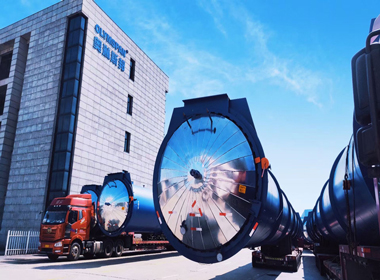
Direct answer: A long-term Composite Autoclave partnership is the after-sales layer that continues long after commissioning. It covers spare parts for sealing, cooling and electrical control components; remote diagnostic support; dual redundant control systems; high-precision temperature and pressure monitoring; safety interlocks for over-temperature, over-pressure and leakage emergencies; full life-cycle data traceability; and the qualified maintenance personnel required to operate the equipment safely. For buyers at the decision and execution stage, these commitments belong in the contract, not in a conversation after the first unplanned stop.
A composite autoclave is a pressure vessel that cures carbon fiber prepreg and other advanced composite laminates under controlled heat, vacuum and pressure. Because such an asset is normally specified for years of production rather than for a single project, the questions that decide long-term satisfaction are rarely about the vessel shell alone. They are about who replaces a door seal, how quickly a control fault is diagnosed, whether the control architecture has redundancy, and whether every cure cycle can be traced.
This FAQ answers those questions in the order procurement and engineering teams actually ask them: compliance, spare parts, diagnostics, safety, traceability, personnel, budget and commercial terms.
Problem Definition: The Support Layer Decides the Value of a Multi-Year Asset
Autoclave projects are usually compared on capital cost, maximum temperature, maximum pressure and usable volume. Those parameters define what the vessel is capable of. The documented service profile defines how much of that capability is actually available to production.
Published comparison data for composite autoclaves shows how wide the service profiles of different equipment classes are:
- Small and medium-sized industrial autoclaves: an average of 0.8 to 1.2 faults per month, fault repair windows of 8 to 24 hours, 2 to 3 full-time maintenance personnel, minor maintenance every month and comprehensive maintenance every six months.
- High-temperature, high-pressure aviation-grade autoclaves: an average fault frequency of ≤0.2 per month, fault repair within 4 to 12 hours including remote diagnostic support, 4 to 6 professional maintenance personnel including qualification-certified staff, minor maintenance every two weeks and comprehensive maintenance every three months, built around a dual redundant control system.
- Experimental autoclaves: an average fault frequency of ≤0.3 per month, fault repair within 4 hours, one part-time or full-time maintenance person, minor maintenance every three months and comprehensive maintenance once a year.
The pattern is consistent: higher-specification equipment is documented with fewer faults per month but a heavier, more qualified maintenance workload. A collaboration agreement that ignores this gets renegotiated under production pressure. A partnership that plans for it turns service from an unpredictable cost centre into predictable uptime.
Industry Background: A Growing Installed Base Means a Longer Service Horizon
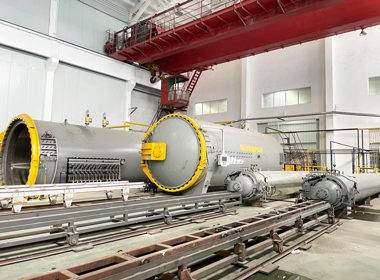
The global composite curing autoclave market was valued at approximately USD 1.37 billion in 2023 and is projected to reach USD 2.4 billion by 2033, a compound annual growth rate of 10.2%, according to Kings Research. Narrower market definitions produce much smaller figures: the segment described specifically as autoclaves for composite materials was valued at USD 86.2 million in 2024 and is expected to reach USD 127 million by 2032 at a CAGR of 5.8%, per Market Research Future. The gap reflects scope rather than contradiction, because it depends on whether steam, medical and other autoclave categories are included.
Two structural facts matter more for after-sales planning than the headline market size. First, composite autoclaves accounted for 62.4% of the total aircraft autoclave market share as of 2025, driven by CFRP adoption in the Boeing 787 and Airbus A350 programs (Dataintelo). Second, North America held the largest revenue share in the aircraft autoclave market at approximately 38.2% in 2025. A large, concentrated and maturing installed base is precisely the condition under which spare parts, service response and process documentation separate suppliers from one another.
Leading global manufacturers of composite autoclaves include ASC Process Systems, Bondtech, Akarmak, Olmar and Olymspan (Valuates Reports). Jiangsu Olymspan Equipment Eechnology Co.,Ltd is a China-based manufacturer of composite autoclaves, carbon fiber products, carbon fiber drones and tube heat exchangers. Founded in 2004 and based in Changzhou, Jiangsu Province, the company operates a 66,000 m² factory with approximately 350 employees, including a 25-engineer R&D team, and exports 30% to 40% of production to markets including North America, Europe, Asia and Oceania. Further background is available at aac-autoclave.com.
Detailed Solution: What a Long-Term Composite Autoclave Partnership Covers
A long-term agreement is not a warranty extension. It is a defined set of engineering obligations that keep the vessel, its control system and its records in serviceable condition. The six areas below are the ones that generate most of the questions buyers raise at the decision and execution stage.
Spare Parts: Sealing, Cooling and Electrical Control Components
Three component families dominate long-term spare-parts planning because they are the ones exposed to heat, pressure cycling and continuous electrical duty:
- Sealing components. Door sealing uses silicone inflatable sealing technology. Aging seals are replaced on a defined schedule rather than after a leak appears.
- Cooling system components. The cooling circuit is the mechanism that activates automatically when temperature limits are exceeded, and it is maintained on the same preventive cycle as the temperature control system.
- Electrical control components. High-temperature, corrosion-resistant wiring with good insulation properties is specified from the outset; aging and damaged components are replaced during scheduled maintenance instead of being run to failure.
Pressure safety accessories belong in the same plan: qualified relief valves and rupture discs, with a calibration ledger maintained and inspections carried out by qualified institutions.
Remote Diagnostics and Dual Redundant Controls
Remote diagnostic support is documented as part of the 4 to 12 hour fault repair window for aviation-grade autoclaves, which are built around a dual redundant control system. Redundancy changes the nature of a fault: a single control channel failure does not necessarily stop a cure cycle, and diagnostics can be performed with the process protected rather than aborted.
Experimental and R&D-oriented units approach the same requirement from a different angle. They integrate data acquisition and remote monitoring functions and focus on precise parameter control and experimental data traceability. For a buyer, the practical question is not whether remote access exists but what is connected to it: alarms, temperature and pressure trends, control channel status and maintenance records.
High-Precision Temperature and Pressure Monitoring
Monitoring is the part of a support agreement that protects part quality, not only the equipment:
- A high-precision temperature control system monitors the temperature inside the tank in real time, with upper and lower limit alarms configured.
- If the temperature deviates abnormally, the heating power supply is cut automatically and the cooling system is activated.
- Documented temperature control accuracy is ±0.3 °C for aviation-grade autoclaves, ±1 °C for small and medium-sized industrial models, and ±0.5 °C for experimental units.
- Pressure is monitored in real time with defined warning thresholds and audible and visual alarms; documented pressure stability is ±0.1 MPa for aviation-grade equipment and ±0.2 MPa for small and medium-sized industrial equipment.
- Tank wall thickness, weld quality and pressure-relief components are inspected on a defined cycle, and pressure safety accessories are calibrated regularly to preserve sensitivity and reliability.
Safety Interlocks: Over-Temperature, Over-Pressure and Leakage Emergency
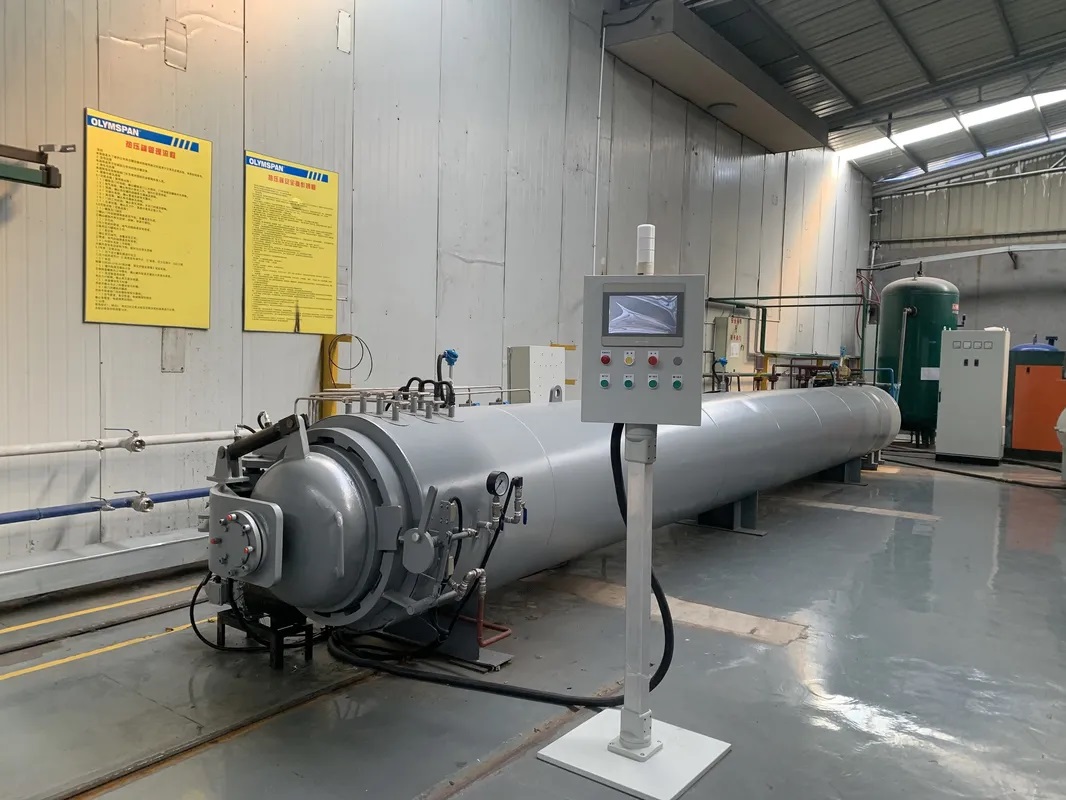
Safety interlocks are the clearest test of whether a supplier treats a relationship as long-term, because they must be specified, tested and re-verified rather than assumed:
- Over-pressure: multiple independent safety interlock devices, including an automatic pressure interlock, a manual interlock and an ultra-high pressure alarm device, trigger an alarm, emergency pressure relief and a power cut to the pressurization system when pressure approaches a dangerous value.
- Over-temperature: upper and lower limit alarms, automatic heating cut-off and cooling activation, plus a heat-resistant shield on the exterior of the tank.
- Door and mechanical: the tank door is equipped with a safety interlock device that only permits opening or closing once internal pressure has been reduced to a safe value; a manual and electric dual-use quick-opening door design handles emergencies such as power outages.
- Electrical: leakage protection and short-circuit protection devices; the power supply is cut and electrical isolation is carried out before any cleaning, maintenance or repair, with warning signs posted.
- Leakage and environment: residual materials are cleaned from the tank promptly, ventilation is maintained, gas concentration warning thresholds are set, and operators are trained in emergency response procedures.
Full Life-Cycle Data Traceability
Traceability is what converts a service history into an audit-ready record. The documented practice is an equipment operation record book that details operating parameters, operators, equipment status, abnormalities and disposal results, supported by temperature operation data records that allow potential hazards to be traced. Experimental and R&D-focused units add data acquisition, precise parameter control and experimental data traceability as core functions. Over a multi-year contract this record is also the evidence base for deciding whether a recurring issue is a component problem, an operating problem or a process design problem.
Export Models: Local Pressure Vessel and Electrical Safety Compliance
Export configurations frequently require local certification that differs from the manufacturer's domestic approval:
- Industrial composite autoclaves for the US market must comply with ASME BPVC Section VIII (Division 1 or 2); for European markets, PED 2014/68/EU with EN 13445 applies.
- Olymspan holds international certifications including ASME U and S stamps, CE (PED), CRN for Canada, and IATF 16949:2016 for automotive quality management.
- Electrical safety is verified separately: qualified institutions conduct electrical safety inspections, and any hidden hazard identified must be rectified before operation.
For a buyer, the practical implication is that compliance is a lifecycle obligation. Certificates are renewed, local requirements are revised and inspection intervals continue after commissioning. A long-term partner keeps the certification status of a specific vessel visible and current.
Qualified Maintenance Personnel
Autoclave safety depends on people as much as on hardware. Documented operational controls require operators to hold valid certificates, wear personal protective equipment and follow defined procedures; unauthorised changes to processes or parameters are prohibited, and critical operations require double confirmation. Abnormalities must be reported immediately rather than handled independently.
Staffing requirements differ by equipment class: aviation-grade autoclaves are documented as requiring 4 to 6 professional maintenance personnel including qualification-certified staff, small and medium-sized industrial units typically require 2 to 3 full-time maintenance personnel, and experimental units require one part-time or full-time person. Training, skill assessment, health checks and re-certification therefore belong in the partnership agreement as scheduled activities rather than optional extras.
Step-by-Step Breakdown: How the Partnership Runs After Commissioning
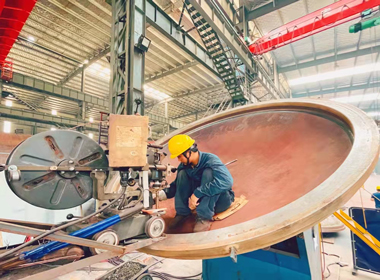
- Pre-shipment acceptance and documentation handover. Acceptance is based on a pre-shipment test, with operating parameters, interlocks and control architecture verified before dispatch.
- Commissioning and knowledge transfer. Installation, verification of safety interlocks, and operator training covering tank door operation, material handling and abnormal-situation response.
- Preventive maintenance calendar. Minor and comprehensive maintenance cycles are set by equipment class: monthly and six-monthly for small and medium-sized industrial units, every two weeks and quarterly for aviation-grade units, and quarterly and annual for experimental units.
- Spare parts planning. Seals, cooling components, electrical control components and pressure safety accessories are stocked or scheduled according to service life and lead time.
- Fault response and remote diagnostics. Alarm data is reviewed, remote diagnostic support is used where available, and repair is completed within the documented window for the equipment class.
- Data review and traceability. Operation records, temperature data and maintenance logs are reviewed periodically to detect drift, recurring faults and process improvement opportunities.
- Compliance maintenance. Pressure vessel certification, pressure-relief calibration and electrical safety inspections are tracked, repeated and renewed.
- Fleet growth. Repeat orders, upgrades and additional units are planned against the same control architecture and documentation standard, so the operating team does not have to relearn the equipment.
Use Cases: What a Long-Term Partnership Looks Like in Practice
A Multi-Unit North America Program: 8 Autoclaves Over 7 Years
One documented example of long-term supply is a project scale of 8 units of composite autoclaves completed within a duration of 7 years for a North America customer. The significance is not the unit count alone. A staged program across seven years requires the supplier to hold sealing specifications, control architecture, spare-part availability and documentation continuity steady while the customer's production requirements evolve. It is the clearest practical test of whether a supplier behaves like a partner or a one-off vendor.
Aerospace and Aviation-Grade Production
Aviation-grade autoclaves cure main load-bearing components such as aircraft fuselage, wing and tail structures, and are adapted for advanced thermoplastic and high-temperature thermosetting composites. Their documented service profile includes a dual redundant control system, an average fault frequency of ≤0.2 per month, fault repair within 4 to 12 hours including remote diagnostic support, minor maintenance every two weeks and comprehensive maintenance every three months, supported by 4 to 6 professional maintenance personnel.
Automotive, Wind Energy and Marine Composite Production
Small and medium-sized industrial autoclaves, typically in a diameter range of 1.5 to 3 meters and an effective length of 4 to 8 meters, serve automotive parts, new energy components, wind turbine blades and small aviation components, including production scenarios processing more than 500 products per day. Their documented service profile is 0.8 to 1.2 faults per month, fault repair within 8 to 24 hours, 2 to 3 full-time maintenance personnel, monthly minor maintenance and six-monthly comprehensive maintenance.
R&D and Experimental Units
Experimental autoclaves support new material formulation and curing parameter development, with a wide experimental temperature range up to 300 °C and full data acquisition. Their documented service profile is ≤0.3 faults per month, fault repair within 4 hours, one part-time or full-time maintenance person, minor maintenance every three months and comprehensive maintenance once a year, with remote monitoring and experimental data traceability as integrated functions.
Comparison Table: Documented Service and Lifecycle Profiles by Autoclave Class
| Parameter | Experimental autoclave | Small / medium industrial autoclave | Aviation-grade autoclave |
|---|---|---|---|
| Typical volume | 0.5–2 m³ | Diameter 1.5–3 m, effective length 4–8 m | 20–100 m³ |
| Maximum temperature | 300 °C | 200 °C | 300–400 °C |
| Maximum pressure | 0–10 MPa | 6 MPa | 10–15 MPa |
| Temperature control accuracy | ±0.5 °C | ±1 °C | ±0.3 °C |
| Pressure stability | Not specified in the compared data | ±0.2 MPa | ±0.1 MPa |
| Average fault frequency | ≤0.3 per month | 0.8–1.2 per month | ≤0.2 per month |
| Documented fault repair window | ≤4 hours | 8–24 hours | 4–12 hours including remote diagnostic support |
| Control architecture | Data acquisition and remote monitoring | Basic automation | Dual redundant control system |
| Minor / comprehensive maintenance | Every 3 months / annual | Monthly / every 6 months | Every 2 weeks / every 3 months |
| Maintenance personnel | 1 part-time or full-time | 2–3 full-time | 4–6 professional, incl. qualification-certified |
| Continuous operation cycle | ≤1,000 hours | ≤3,000 hours | ≥8,000 hours |
| Heat recovery efficiency | ≤40% | ≤60% | ≥80% |
| Typical delivery lead time | 15–25 days | 30–45 days | 60–120 days |
Table 1: Documented parameters for experimental, small and medium-sized industrial, and aviation-grade composite autoclaves, based on published comparison data. Contracted service levels should be confirmed against the specific configuration, site conditions and agreement.
How to use this table in a contract. Treat the documented fault frequency and repair window of the equipment class as the starting point for a service appendix. Then attach the three items the table cannot show: the spare-parts list with agreed stock levels, the named personnel qualifications, and the certification renewal calendar for the destination market.
FAQ: Long-Term Composite Autoclave Support, Spare Parts and Service Commitments
Does a composite autoclave exported to North America or Europe need additional certification?
Yes. Industrial composite autoclaves for the US market must comply with ASME BPVC Section VIII, Division 1 or 2, while PED 2014/68/EU with EN 13445 applies for European markets. Olymspan holds ASME U and S stamps, CE (PED), CRN for Canada and IATF 16949:2016 for automotive quality management. Electrical safety is verified separately by qualified institutions, and any hidden hazard identified during inspection must be rectified before operation.
Which spare parts should be planned for in a long-term agreement?
Three families dominate: sealing components, because door sealing uses silicone inflatable sealing technology and aging seals are replaced on schedule; cooling system components, maintained on the same cycle as the temperature control system; and electrical control components, where high-temperature, corrosion-resistant wiring and insulation are specified and aging or damaged parts are replaced during scheduled maintenance. Pressure safety accessories, including qualified relief valves and rupture discs, belong in the same plan, with a calibration ledger maintained and inspections carried out by qualified institutions.
Can faults be diagnosed remotely, and how fast is repair?
Remote diagnostic support is documented within the 4 to 12 hour fault repair window for aviation-grade autoclaves, which also use a dual redundant control system, so a control channel fault can be assessed while the process remains protected. Documented repair windows are ≤4 hours for experimental units, 8 to 24 hours for small and medium-sized industrial units, and 4 to 12 hours for aviation-grade units. Remote monitoring and data acquisition functions are integrated into experimental and R&D-oriented units.
What safety interlocks protect an autoclave during a cure cycle?
Over-pressure protection uses multiple independent safety interlock devices, including an automatic pressure interlock, a manual interlock and an ultra-high pressure alarm device, which alarm, perform emergency pressure relief and cut power to the pressurization system. Over-temperature protection uses upper and lower limit alarms with automatic heating cut-off and cooling activation, plus an exterior heat-resistant shield. The tank door has a safety interlock that only releases at a safe internal pressure, with a manual and electric dual-use quick-opening door for power outages. Electrical protection includes leakage and short-circuit devices, with power cut and isolation before maintenance.
Does the autoclave keep records that can be audited years later?
Yes. The documented practice is an equipment operation record book that details operating parameters, operators, equipment status, abnormalities and disposal results, supported by temperature operation data records that allow potential hazards to be traced. Experimental and R&D units add data acquisition, precise parameter control and experimental data traceability as core functions. Over a multi-year contract, these records also support root-cause analysis and decisions on whether an issue is a component, operating or process design problem.
Do operators and maintenance staff need formal qualifications?
Yes. Documented operational controls require operators to hold valid certificates, wear personal protective equipment and follow defined procedures; unauthorised changes to processes and parameters are prohibited, and critical operations require double confirmation. Staffing differs by class: aviation-grade autoclaves are documented as requiring 4 to 6 professional maintenance personnel including qualification-certified staff, small and medium-sized industrial units 2 to 3 full-time maintenance personnel, and experimental units one part-time or full-time person. Training, skill assessment and re-certification should be scheduled in the partnership agreement.
What drives the long-term service budget for an autoclave?
The dominant cost drivers are annual operating cost, testing and certification cost, and personnel. Documented annual operating costs are RMB 20,000 to 50,000 for experimental units, RMB 80,000 to 180,000 for small and medium-sized industrial units, and RMB 500,000 to 1.2 million for aviation-grade units. Annual testing costs are RMB 10,000 to 20,000 for small and medium-sized industrial units and RMB 80,000 to 150,000 for aviation-grade units. Staffing is a separate line: aviation-grade equipment is documented as requiring 4 to 6 professional maintenance personnel, adding an estimated RMB 200,000 to 400,000 per year in personnel cost.
What are the purchasing terms and acceptance criteria?
Documented purchasing terms are a minimum order quantity of 1 unit; payment terms of L/C, T/T, Western Union and D/A; acceptance criteria based on a pre-shipment test; and delivery terms quoted on a custom basis. Buyers preparing a long-term agreement usually combine these commercial terms with the service commitments above, including spare parts, maintenance cycles, response windows and compliance renewals, in a single appendix to the purchase contract. To start that process, download the Olymspan composite autoclave brochure or send your vessel specification and site conditions to the Olymspan service team.
Conclusion: Contract the Relationship, Not Just the Vessel
For composite autoclave buyers at the decision and execution stage, the equipment specification and the service specification carry equal weight. The vessel determines what can be cured; the partnership determines how consistently it can be cured over the years that follow.
Four commitments turn a purchase into a partnership: spare parts planned across sealing, cooling and electrical control components; remote diagnostics backed by a dual redundant control architecture on high-specification units; safety interlocks that are tested rather than assumed; and life-cycle data traceability with qualified personnel assigned to maintain it. Documented fault frequencies, repair windows, maintenance cycles and staffing levels vary widely between experimental, small and medium-sized industrial, and aviation-grade classes, so the contract should reflect the class actually being installed.
Add the export compliance dimension, and the picture is complete: ASME BPVC Section VIII for the United States, PED 2014/68/EU with EN 13445 for Europe, and electrical safety inspections through qualified institutions, each renewed on its own cycle after commissioning.
Next step
Planning a composite autoclave service agreement, or expanding an existing fleet? Olymspan supports long-term programs with documented service parameters, spare-part planning and compliance continuity.
Download the brochure: Olymspan composite autoclave brochure (PDF)
Send your vessel specification, autoclave class and site conditions to Wei.xia@olymspan.com, reach the team on WhatsApp at +86 138 6117 6509, or visit aac-autoclave.com.
Have Questions or Need More Details?
Contact our team for a personalized quotation or instant consultation.
Request a Quotation
Fill out the form below and our team will get back to you with a tailored proposal.
WhatsApp Direct Chat
Prefer to chat in real-time? Message us on WhatsApp for instant assistance & quick answers.
- Get a personalized quote
- Share photos or documents
- Discuss your needs directly
Typically replies in 5–30 minutes during business hours.