
Composite Autoclave Applications: Matching Systems to R&D and Production Scenarios
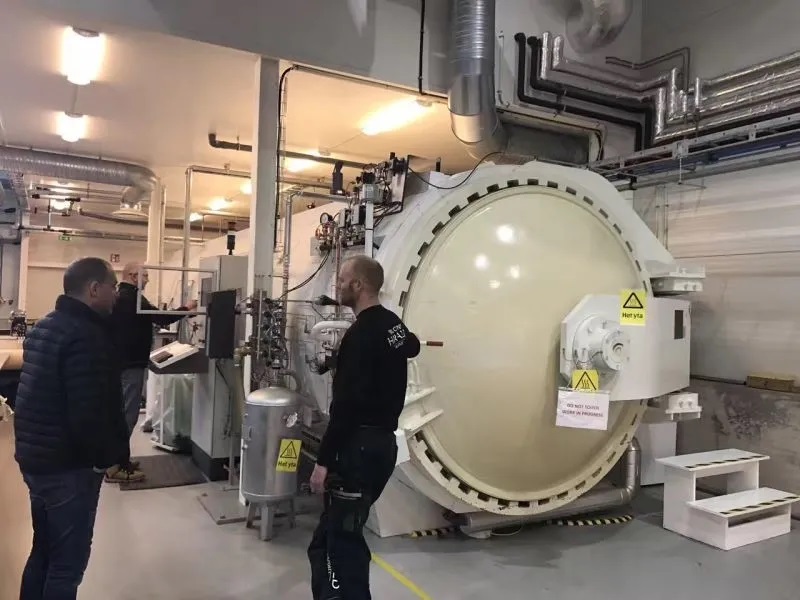
Composite Autoclave Applications: Matching Systems to R&D and Production Scenarios
Quick answer: composite autoclave applications split into three operating environments, and each one is defined by duty cycle rather than chamber size. Scientific research systems need low noise (≤60 dB), a compact footprint and precise data traceability. Small-batch manufacturing systems need continuous multi-batch operation of 8–16 hours per day with automatic feeding and crane or forklift access. Full-scale production systems need 20–24 hours per day of continuous running, dual redundant control and defect-focused consistency. A system specified for one environment rarely performs at its best in another.
A composite autoclave applies heat, pressure and vacuum to cure prepreg laminates and advanced composite materials inside a pressure vessel. That definition is stable across industries, but the equipment sold under the name is not. A laboratory unit that cures a few hundred grams of aerospace prepreg and an 18-metre high-pressure vessel that cures aircraft primary structure share a working principle; they share almost nothing else.
This guide maps three application environments — scientific research, small-batch manufacturing and full-scale high-volume production — to the system features each one genuinely requires, and explains how to convert a project description into a specification list.
Problem Definition: Why One Specification Cannot Serve Three Environments
Most composite autoclave selection failures are not manufacturing defects. They are specification errors, and they appear in three recognisable forms.
The first is under-specified laboratory equipment. A research autoclave installed in a university building must satisfy two conditions that have nothing to do with curing pressure: it must fit restricted floor space, and it must run quietly. The reference figures for laboratory composite autoclaves are a noise level of ≤60 dB and a compact equipment size suitable for laboratory space. A system designed for a factory floor may cure the sample correctly and still fail site acceptance.
The second is a production autoclave used as a research tool. Intermittent single runs of 2–8 hours and continuous multi-batch operation of 8–16 hours per day load the heating and cooling circuits, the door mechanism and the control software differently. A unit can be operated outside its intended pattern, but the maintenance burden simply moves to the plant, where every hour of unplanned downtime is a production loss.
The third is a small-batch system scaled into volume production without the handling infrastructure. Full-scale lines assume automated feeding, curing and discharging, plus cranes or forklifts to move tooling and mandrels. Material handling belongs in the equipment scope from the start, not in a later retrofit.
All three errors share one root cause: “composite autoclave” names a pressure vessel family, not a single product. The application environment decides which requirements are mandatory and which are optional.
Industry Background: Where Composite Autoclave Demand Comes From
Demand for composite curing capacity is expanding on two separate tracks. Kings Research values the global composite curing autoclave market at approximately USD 1.37 billion in 2023 and projects USD 2.4 billion by 2033, equivalent to a CAGR of 10.2%. A narrower definition — autoclaves for composite materials specifically — was valued at USD 86.2 million in 2024 with a forecast of USD 127 million by 2032 at a CAGR of 5.8% (Market Research Future). The distance between those two figures reflects how category boundaries are drawn, not a disagreement about direction.
Aviation remains the anchor application. Dataintelo reports that composite autoclaves accounted for 62.4% of the total aircraft autoclave market as of 2025, driven by CFRP adoption in the Boeing 787 and Airbus A350 programmes, with North America holding roughly 38.2% of revenue share in 2025. Below that aviation tier, the same curing principle is applied to automotive parts, battery housings, wind power components, rail transit parts and civil composite goods such as fitness and medical equipment housings.
Two compliance frameworks shape the vessel itself. Industrial composite autoclaves for the United States must comply with ASME BPVC Section VIII (Division 1 or Division 2); European deliveries follow PED 2014/68/EU (EN 13445). Aviation and military-grade work adds another layer, referenced in this guide as GJB9001C aviation and military grade standards.
The supplier base is international. Valuates Reports lists ASC Process Systems, Bondtech, Akarmak, Olmar and Olymspan among the leading global manufacturers of composite autoclaves. Olymspan, formally Jiangsu Olymspan Equipment Technology Co., Ltd., was founded in 2004, operates a 66,000 m² manufacturing facility with approximately 350 employees and a 25-engineer R&D team, and exports 30% to 40% of its production to markets including North America, South America, Western Europe, Eastern Europe, Eastern Asia, Southeast Asia, the Middle East, Africa and Oceania.
For a buyer in the awareness and research stage, the practical consequence is this: the market is deep enough to supply almost any configuration, which means the selection decision rests almost entirely on how well the application is described before the enquiry is sent.
Detailed Solution: Three Application Profiles and the Features They Require
Profile 1 — Scientific Research: University, Provincial and National Projects
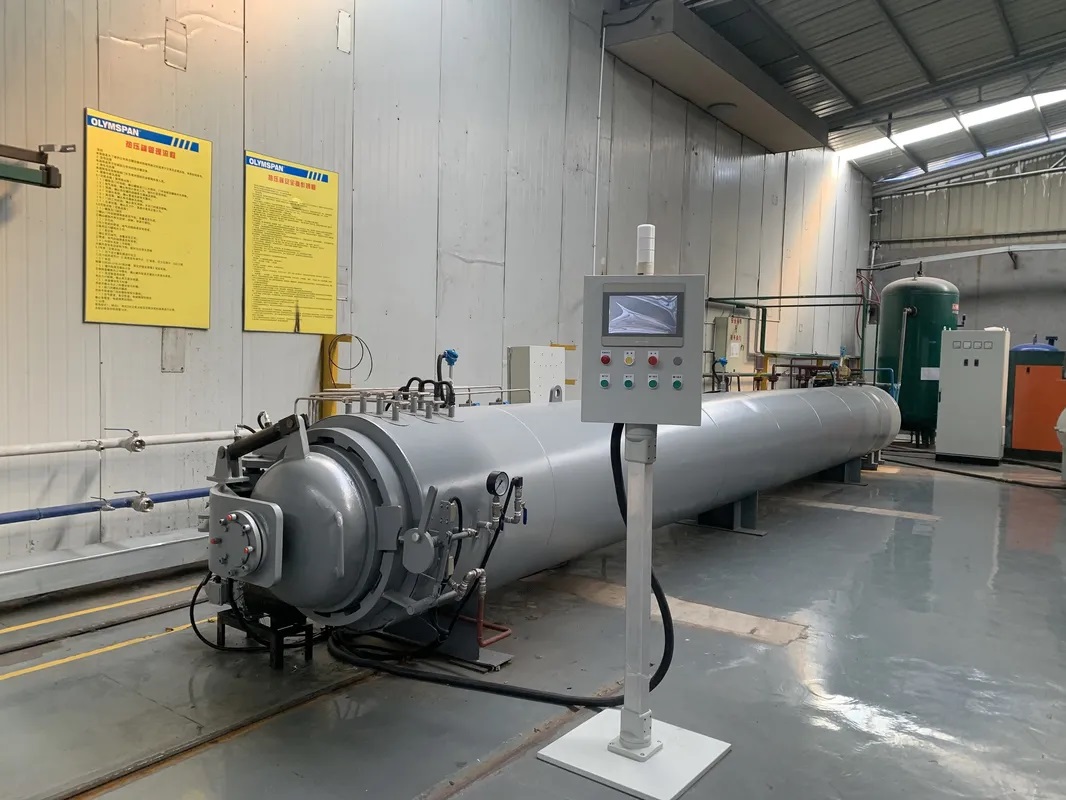
This profile serves university research, new material R&D and enterprise R&D departments working in new energy materials, composite materials and polymer materials, with subdivision directions including aerospace material R&D, new energy battery material R&D and civil composite material formula R&D. Typical projects are new material formula development, process parameter debugging, small-batch sample verification, provincial and national level scientific research projects, and enterprise technology upgrade programmes.
The working environment is a normal-temperature, normal-pressure laboratory with no dust and no corrosive gas. Voltage is stable at 220V or 380V, ambient temperature is controlled between 15–25°C and humidity between 40% and 60%. The equipment runs intermittently — a single run lasts 2–8 hours, started for the experiment and shut down for cleaning afterwards — so no continuous long-term start-up capability is required.
What the system must deliver instead is precision and evidence:
- High-precision temperature and pressure control: temperature ±0.3°C to ±0.5°C and pressure ±0.05 MPa.
- Storage and retrieval of multiple experimental parameter sets.
- Precise data traceability, with remote monitoring of the experiment and export of the recorded data.
- Compact equipment size suitable for laboratory space, and noise ≤60 dB.
- Manual and automatic dual-mode operation, plus laboratory safety standards. Export models may also need to comply with local electrical safety regulations.
The matched equipment set is equally specific: high-precision sensors, data acquisition devices, remote monitoring terminals, sample placement racks, small cooling devices, optional vacuum systems, experimental data storage equipment and, in some scenarios, gas purification devices.
Performance goal: process optimisation. The deliverable is a validated cure cycle and a reusable parameter record, not a part count.
Profile 2 — Small-Batch Manufacturing
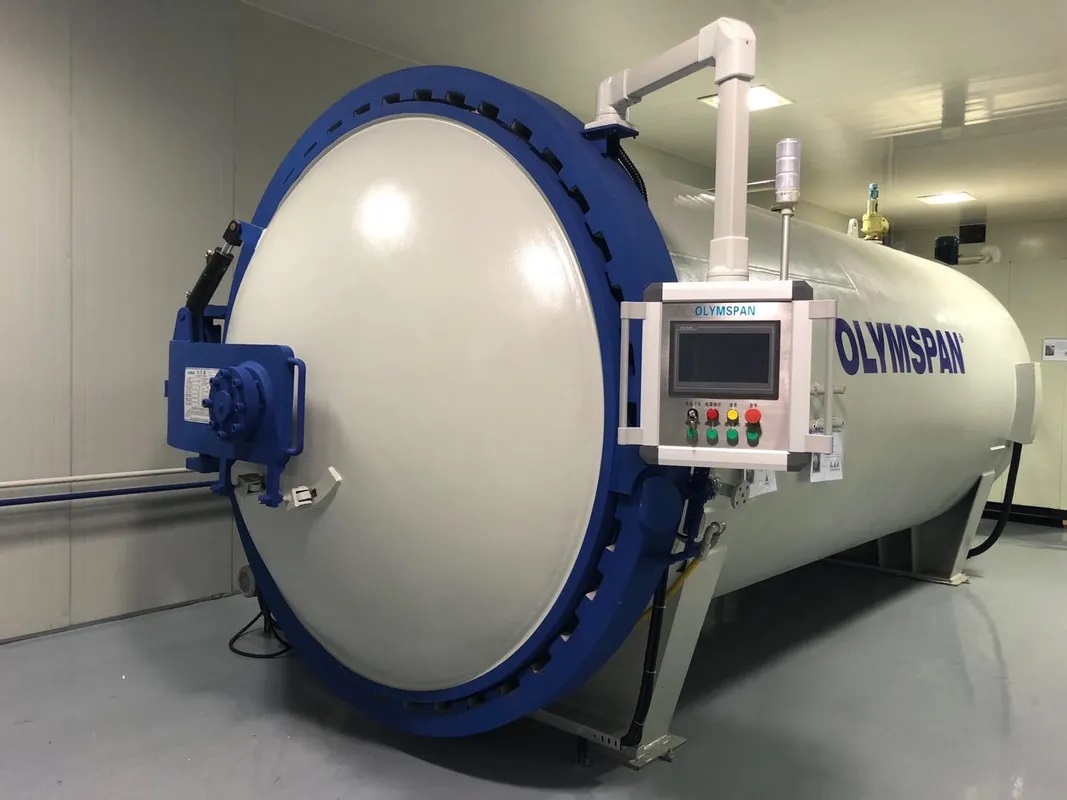
This profile covers automobile manufacturing (parts matching), new energy production including battery shells and photovoltaic modules, wind power small parts, civilian composite materials such as fitness equipment and medical equipment shells, and rail transit parts manufacturing.
Conditions are less controlled than a laboratory. The plant allows slight dust, ambient temperature ranges from −10°C to 40°C, humidity from 30% to 70%, with stable 380V supply and ventilation facilities. Some scenarios must cope with high temperature and high humidity, so the equipment needs a degree of anti-corrosion capability.
The functional target is small and medium batch curing that improves product strength, density and consistency while reducing production losses and raising efficiency. That translates into a different operating specification:
- Continuous multi-batch operation, 8–16 hours per day, with automatic feeding, curing and discharging.
- Operating parameters adjustable to the production plan, plus a manual emergency operation mode for sudden shutdowns.
- Stable running defined as an average of ≤1.2 failures per month and a fault repair time of ≤24 hours.
- Manual and electric dual-purpose quick-opening door, suitable for curing multiple product specifications.
- Low energy consumption of 0.5–0.7 kWh per m³ of unit volume, anti-leakage, anti-overheating and overpressure protection, and compliance with industrial production safety standards. Export models may need to comply with local pressure vessel certification.
The matched equipment list is the clearest difference from the laboratory profile: material handling equipment such as forklifts and cranes, automated feeding and discharging devices, cooling systems, electrical control systems, sealing replacement tools, vulnerable parts reserves, ventilation and dust removal equipment, and vacuum systems in some scenarios.
Performance goal: throughput with repeatability. The process is broadly known; the equipment must hold it across many cycles per day.
Profile 3 — Full-Scale High-Volume Production
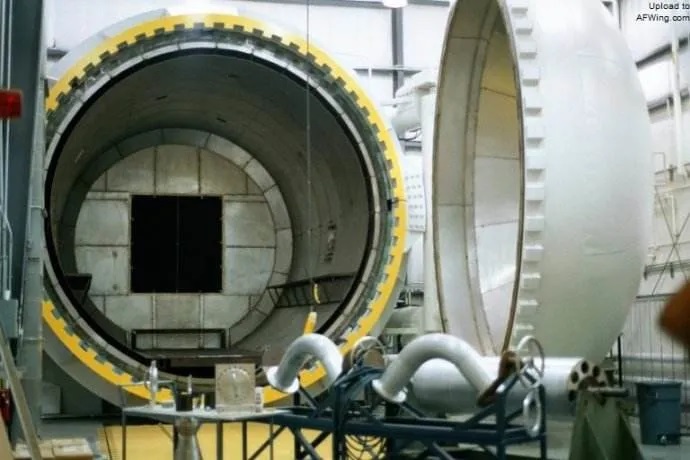
Volume production serves aerospace manufacturing, high-end military manufacturing, high-end medical equipment with implantable components, and advanced composite material manufacturing. The parts involved are aircraft main load-bearing components, missile shells, radar covers and core components of high-end medical equipment.
The environment is a high-end industrial plant: dust-free, free of corrosive gas, free of electromagnetic interference, with ambient temperature controlled at 20–28°C and humidity at 30% to 50%. Voltage is stable, with 380V or 660V options, and the facility is equipped with constant temperature and humidity provisions. Critically, the equipment is expected to operate continuously for long periods under high temperature and high pressure.
The curing task itself is more demanding: high-temperature, high-pressure curing of materials such as PEEK and polyimide, eliminating internal bubbles and improving component strength, accuracy and consistency so that aerospace and military parts meet their quality standards.
Requirements at this level stack up:
- Long-term continuous operation of 20–24 hours per day, supporting fully automated control with remote diagnosis and fault warning, real-time monitoring and automatic parameter adjustment.
- A dual redundant control system to ensure uninterrupted operation.
- Temperature control uniformity of ±0.3°C to ±0.5°C, pressure stability of ±0.1 MPa, and a continuous operation cycle of ≥8,000 hours.
- Multiple safety interlocks covering over-temperature, over-pressure and leakage emergencies, with a high-strength corrosion-resistant tank body.
- GJB9001C aviation and military grade compliance, professionally qualified maintenance personnel, and full life cycle management with data traceability functions. Some models require special military and aviation certification.
Matched equipment reflects the same logic: a dual redundant control system, remote diagnostic terminal, high-precision temperature and pressure monitoring equipment, heat recovery device, inert gas protection system, vacuum system, professional maintenance tools, emergency pressure relief device, full process quality traceability system and supporting professional testing equipment.
Performance goal: defect reduction. The cure cycle is already qualified, so the equipment’s task is to reproduce it at volume.
Step-by-Step Breakdown: Matching a Composite Autoclave to a Defined Project
The following sequence converts an application description into a specification list before any supplier is contacted.
- Classify the project. Decide which of the three environments applies: laboratory research (including provincial and national level scientific research projects), small and medium-sized production projects, or mass production of aerospace, military and high-end medical components. Mixed use should be treated as two separate requirement sets.
- Define the duty cycle. State hours per day and batches per day. Intermittent single runs of 2–8 hours, continuous multi-batch operation of 8–16 hours, and long-term continuous operation of 20–24 hours lead to three different heating, cooling and redundancy designs.
- Set precision and traceability targets. Laboratory and high-end production profiles converge on ±0.3°C to ±0.5°C temperature control; laboratory pressure control is ±0.05 MPa and high-end production pressure stability is ±0.1 MPa. Decide early whether parameter sets must be stored, retrieved and exported, and whether full process quality traceability is mandatory.
- Plan the loading route. Confirm how tooling and parts enter the vessel. Laboratory work uses sample placement racks and a compact footprint; small-batch lines use automated feeding and discharging with forklifts or cranes; volume lines favour automated handling and may need a manual and electric dual-purpose quick-opening door for mixed specifications.
- Confirm the operating environment and utilities. Check ambient temperature and humidity ranges, voltage options (220V, 380V or 660V), ventilation or dust removal needs, cooling capacity, and whether anti-corrosion or inert gas protection is required. Laboratory installations should also confirm the ≤60 dB noise target at the intended location.
- Fix the compliance route. Decide whether the vessel needs ASME BPVC Section VIII (Division 1 or 2) or PED 2014/68/EU (EN 13445), whether export models must meet local pressure vessel or electrical safety regulations, and whether GJB9001C-grade compliance applies. Certification scope changes engineering, documentation and lead time.
- Define service and spares before ordering. For small-batch and volume profiles, agree the acceptable monthly failure rate, the fault repair window, the reserves of vulnerable parts and sealing replacement tools, and whether remote diagnostics will be used for fault prediction.
A note on chamber size: listed industrial configurations start from around 2.0 m diameter and 5 m length and can be customised, while high-pressure aerospace units are listed at φ3.5 m × 18 m. Diameter and length should be the output of steps 2 to 4, not the starting point of the enquiry.
Use Cases: How the Three Profiles Look in Practice
Case profile A — a university laboratory running a provincial research project. The team is developing a new composite formulation and needs to debug cure parameters across many small samples. The requirements list is short but strict: temperature control of ±0.3°C to ±0.5°C, pressure control of ±0.05 MPa, storage and retrieval of multiple parameter sets, data export for the project report, a footprint that fits the existing laboratory, and noise at or below 60 dB. Throughput is irrelevant; reproducibility and records are everything.
Case profile B — a tier supplier producing automotive and energy parts. The plant runs 8–16 hours per day and changes product specifications weekly, so the autoclave must handle multi-batch curing with parameters adjusted to the production plan. An automated feeding and discharging arrangement plus a forklift or crane handles tooling weight, and the maintenance agreement targets no more than 1.2 failures per month with repair inside 24 hours. Energy consumption of 0.5–0.7 kWh per m³ of unit volume is part of the running-cost calculation.
Case profile C — an aerospace component programme moving to volume. The cure cycle has been qualified, and the production question becomes consistency. The line runs 20–24 hours per day under a dual redundant control system with remote diagnosis and automatic parameter adjustment. Temperature uniformity of ±0.3°C to ±0.5°C and pressure stability of ±0.1 MPa protect part quality, the ≥8,000-hour continuous operation cycle sets the maintenance calendar, and full process quality traceability is required for every batch.
Comparison Table: R&D, Small-Batch and High-Volume Requirements
| Requirement dimension | Scientific research (lab) | Small-batch manufacturing | Full-scale high-volume production |
|---|---|---|---|
| Typical users | University research, new material R&D, enterprise R&D departments | Automotive parts, new energy, wind power small parts, civilian composites, rail transit parts | Aerospace, high-end military, high-end medical equipment (implantable components), advanced composites |
| Operating environment | Normal temperature and pressure, no dust or corrosive gas; 15–25°C; 40–60% humidity; 220V/380V | Slight dust tolerated; −10°C to 40°C; 30–70% humidity; 380V with ventilation; some anti-corrosion capability | Dust-free, non-corrosive, no electromagnetic interference; 20–28°C; 30–50% humidity; 380V/660V; constant temperature and humidity facilities |
| Duty cycle | Intermittent; single run 2–8 hours; shut down for cleaning after the experiment | Continuous multi-batch; 8–16 hours per day | Long-term continuous; 20–24 hours per day |
| Control precision | Temperature ±0.3°C to ±0.5°C; pressure ±0.05 MPa | Parameters adjustable to the production plan; manual emergency operation mode | Temperature uniformity ±0.3°C to ±0.5°C; pressure stability ±0.1 MPa |
| Data and traceability | Storage and retrieval of multiple parameter sets; precise data traceability; remote monitoring and data export | Parameter adjustability by production plan; fault and maintenance records | Full process quality traceability; full life cycle management and data traceability |
| Handling and loading | Sample placement racks; compact size for laboratory space | Forklifts and cranes; automated feeding and discharging devices; manual and electric dual-purpose quick-opening door | Automated feeding, curing and discharging under a dual redundant control system |
| Noise constraint | ≤60 dB | — | — |
| Energy and utilities | Small cooling devices; optional vacuum system; gas purification in some scenarios | 0.5–0.7 kWh per m³ of unit volume; ventilation and dust removal equipment | Heat recovery device; inert gas protection system; emergency pressure relief device |
| Reliability target | Lab safety standards; local electrical safety rules for export models | ≤1.2 failures per month; fault repair ≤24 hours | Continuous operation cycle ≥8,000 hours; multiple safety interlocks |
| Compliance focus | Laboratory safety standards; local electrical safety for export models | Industrial production safety standards; local pressure vessel certification for export models | GJB9001C aviation and military grade standards; special certification for some models |
FAQ
Which standards and certifications should be verified before a composite autoclave is ordered?
Two market-entry frameworks define the pressure vessel itself: ASME BPVC Section VIII (Division 1 or Division 2) for the United States, and PED 2014/68/EU (EN 13445) for the European Union. Laboratory systems exported to other markets may additionally need to meet local electrical safety regulations, and industrial export models may have to comply with local pressure vessel certification. Aviation and military-grade production adds a further layer, referenced here as GJB9001C aviation and military grade standards. Olymspan holds ASME ‘U’ and ‘S’ stamps, CE (PED), CRN (Canada) and IATF 16949:2016 for automotive quality management.
Can one autoclave serve both R&D and production?
Usually not at full effectiveness. The laboratory profile is intermittent: a single run lasts 2–8 hours, the system supports manual and automatic dual-mode operation, and the priorities are parameter storage and retrieval plus precise data traceability. The industrial profile is continuous: 8–16 hours per day of multi-batch operation with automatic feeding and discharging on a small-batch line, or 20–24 hours per day on a volume line with a dual redundant control system and ≥8,000-hour continuous operation cycle. A laboratory unit can validate a cure cycle, but scaling to volume normally requires separate capacity sized for the duty cycle, together with material handling equipment such as forklifts or cranes.
What drives the cost of a composite autoclave across the three environments?
Cost follows duty cycle, control architecture and certification scope more than chamber volume alone. Five drivers appear repeatedly: (1) continuous-operation capability — a ≥8,000-hour continuous requirement on a volume system implies different heating, cooling and redundancy design from intermittent laboratory use; (2) chamber dimensions — a listed industrial configuration starts at 2.0 m diameter and 5 m length, while high-pressure aerospace units are listed at φ3.5 m × 18 m; (3) automation scope — automated feeding, curing and discharging devices plus remote diagnosis and fault warning; (4) compliance scope — ASME Section VIII or PED routes, or GJB9001C-grade work for aviation and military production; (5) energy and utility design — small-batch systems are specified at 0.5–0.7 kWh per m³ of unit volume, and volume systems may include heat recovery devices.
How can a system be validated before committing to a full order?
Validation normally starts at laboratory scale. Experimental autoclaves exist for new material formula R&D, process parameter debugging and small-batch sample verification, and they store and retrieve multiple experimental parameter sets with precise data traceability — so a cure cycle developed in the lab can be handed to production as a documented record rather than an estimate. The validated material set then defines the production profile: automotive, energy and rail parts for small-batch lines, or PEEK and polyimide components for high-end production. For part-level evidence, Olymspan lists OEM and ODM service and free samples on its carbon fiber product line, which allows buyers to examine cured parts produced on the same process family before specifying equipment.
What lead time and supply capacity should be planned into the project?
Listed delivery times across Olymspan composite autoclave configurations run from 45 days to 90 days, with the minimum order quantity stated as one set. The shorter figure applies to the professional composite curing platform; the ASME full-automatic aerospace and automotive model and the high-pressure aerospace unit are listed at 90 days; large and civil fully automatic models are listed at 50 days. Supply ability is configuration-dependent: two sets per 90 days for the ASME and high-pressure aerospace models, 30 sets per month on the professional curing platform listing, and up to 50 per month for the large and civil fully automatic models. Because these figures shift with customisation and certification scope, the practical next step is to request a written quotation against your defined profile. The full specification brochure can be downloaded here: Olymspan composite autoclave brochure (PDF).
Conclusion: Choose the Environment First, the Vessel Second
Composite autoclave applications are separated by operating reality, not by marketing tiers. A laboratory system earns its place through low noise, compact dimensions, ±0.3°C to ±0.5°C temperature control, ±0.05 MPa pressure control and traceable experimental data. A small-batch system earns its place through 8–16 hours per day of multi-batch running, automatic feeding and discharging, crane or forklift access and a maintenance profile of no more than 1.2 failures per month. A volume production system earns its place through 20–24 hours per day of continuous operation, dual redundant control, ±0.1 MPa pressure stability, a ≥8,000-hour continuous operation cycle and full life cycle traceability.
Buyers who define the environment, duty cycle, precision target, handling route and compliance route before contacting suppliers receive comparable proposals. Buyers who start with chamber size receive the same answer from every supplier and no way to choose between them.
From Requirement List to Quotation
Jiangsu Olymspan Equipment Technology Co., Ltd. designs and manufactures industrial equipment including aerospace autoclaves and composite curing autoclaves, and specialises in composite autoclaves for carbon fiber products. Main products include composite autoclaves, carbon fiber products, carbon fiber drones and tube heat exchangers. Founded in 2004, the company operates a 66,000 m² facility with approximately 350 employees and a 25-engineer R&D team, and exports 30% to 40% of its production worldwide.
Share your project profile — environment, duty cycle, precision target and compliance route — and we will respond with a matching configuration, sample discussion and quotation.
Website: www.aac-autoclave.com · Brochure: Download the composite autoclave catalogue (PDF)
Email: Wei.xia@olymspan.com · Phone: +86-18626059074 · WhatsApp: +86 138 6117 6509
Address: Henglin Town, Changzhou City, Jiangsu Province, China
Have Questions or Need More Details?
Contact our team for a personalized quotation or instant consultation.
Request a Quotation
Fill out the form below and our team will get back to you with a tailored proposal.
WhatsApp Direct Chat
Prefer to chat in real-time? Message us on WhatsApp for instant assistance & quick answers.
- Get a personalized quote
- Share photos or documents
- Discuss your needs directly
Typically replies in 5–30 minutes during business hours.