
Composite Autoclave Supplier Evaluation: Verifying Capabilities for High-Stakes Delivery
A composite autoclave supplier should be judged on four verifiable capabilities, not on catalog specifications: reliability under continuous duty, completeness of the peripheral system, documented compliance with the operating envelope the project actually needs, and a service response that can be measured in hours. Buyers who audit those four items before signing avoid the most expensive failure mode in this category — a vessel that matches its datasheet but cannot keep a production line running.
A composite autoclave is a pressure vessel wrapped around a process. The vessel is the part every brochure shows; the process is the part that determines whether a project succeeds. For programs where a single missed cure cycle can delay an aircraft component, a wind-blade connector batch, or a battery-housing validation run, supplier evaluation has to move from reading specifications to verifying evidence.
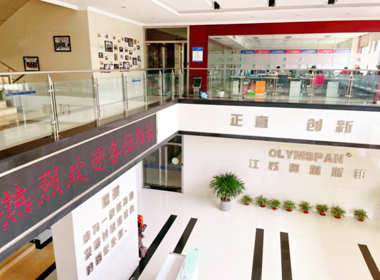
A supplier audit starts on site: production area, assembly bays, and test capability should be seen before the purchase order is signed.
Problem Definition: Why Brochures Fail High-Stakes Buyers
Most composite autoclave procurement problems do not originate in the pressure vessel. They originate in three gaps between what a supplier presents and what a project requires.
- The system gap. A buyer orders an autoclave and receives a vessel. The vacuum system, dual redundant control system, remote diagnostic terminal, inert gas protection system, emergency pressure relief device, and full process quality traceability system are treated as options — or are not quoted at all. Commissioning then stalls while these items are sourced separately.
- The uptime gap. Continuous production programs cannot be planned around a failure rate that nobody has quantified. A supplier that cannot state a failure frequency and a repair time has not defined reliability; it has only promised it.
- The compliance gap. Certification is frequently presented as a logo rather than as a scope. A pressure-vessel stamp, a quality management system reference, and a temperature-uniformity figure are three different kinds of evidence, and each is verified differently.
Each gap is closable with a specific request. The remainder of this guide sets out what to ask, in what order, and what a credible answer looks like.
Industry Background: Why Verification Standards Are Rising
Composite curing remains the demand centre of the industrial autoclave category. HTNXT Research reports that composite autoclaves accounted for 62.4% of total aircraft autoclave market share as of 2025, and projects the global composite curing autoclave market to reach USD 2.4 billion by 2033. Both figures describe a market in which the equipment is increasingly procured by buyers who are not autoclave specialists — composite part manufacturers, tier-two automotive suppliers, wind component producers, and R&D groups.
That shift changes what a supplier must prove. In aviation-grade work, the accepted operating targets are temperature uniformity of ±0.3°C to ±0.5°C and pressure stability of ±0.1MPa. These are narrow bands, and they are only meaningful when the control architecture, the monitoring chain, and the calibration record are all part of the same delivered scope. A supplier that can hold those bands in a factory acceptance test but delivers them without redundancy and without remote diagnostics has delivered a laboratory instrument, not a production asset.
Energy performance has become a parallel evaluation axis. Industrial composite autoclaves typically consume 0.5–0.7 kWh per cubic metre of unit volume, which means the difference between a well-integrated and a poorly integrated system compounds across every batch in a multi-year operating horizon.
Detailed Solution: Five Verification Gates
Supplier evaluation is best run as five gates. A supplier that clears all five can be contracted with confidence; a supplier that clears four should be treated as a project risk with a named owner.
Gate 1 — Duty cycle and continuous operation
Ask what duty cycle the system is designed for, not what it can survive in theory. For high-end industrial and aerospace work, the design intent is long-term continuous operation at 20–24 hours per day, with a continuous operation cycle of ≥8000 hours as a stated requirement. For small and medium industrial production, the realistic pattern is 8–16 hours per day across multiple batches. For laboratory work, the pattern is intermittent: single runs of 2–8 hours, with no continuous long-term startup expected.
These three duty cycles imply three different engineering answers. A supplier that quotes a single frame size for all three has not segmented its own product line.
Gate 2 — Peripheral scope, quoted line by line
For a high-end installation, the required supporting scope includes a dual redundant control system, a remote diagnostic terminal, high-precision temperature and pressure monitoring equipment, and an inert gas protection system. It must also be used with a vacuum system, an emergency pressure relief device, and a full process quality traceability system.
Request each of these as a separate line item with its own specification. The purpose is not to inflate the order; it is to make scope boundaries visible before commissioning, when adjustments are cheap.
Gate 3 — Reliability evidence in numbers
The operating target for continuous industrial composite production is a stable run with an average of ≤1.2 failures per month and a fault repair time of ≤24 hours. Laboratory installations operate to a tighter count but a smaller absolute load — an average of ≤0.2 faults per month with repair within ≤3 hours is the pattern observed in research environments.
Ask for the supplier's own records against these thresholds, and ask what is excluded from the count. A failure frequency without a definition of failure is not evidence.
Gate 4 — Control and diagnostics architecture
The system should work through fully automated control, with remote diagnosis, fault warning, real-time monitoring, and automatic parameter adjustment. This is what makes a 24-hour duty cycle operable without a permanent engineering presence at the vessel.
Ask the supplier to demonstrate the diagnostic path, not just the HMI. The question is how a fault is detected, escalated, and interpreted remotely — and whether the remote diagnostic terminal is included or added later.
Gate 5 — Certification scope and market access
Olymspan, formally Jiangsu Olymspan Equipment Technology Co., Ltd., a Changzhou-based manufacturer of composite autoclaves and pressure vessels founded in 2004, holds ASME 'U' and 'S' stamps, EU CE certification, Canadian CRN, and NB certification. Aviation and military projects additionally reference GJB9001C. Some export models must comply with local pressure-vessel certification in the destination market.
Verify the scope of each certificate against the vessel actually being purchased — stamp, jurisdiction, and model. A certificate held for one product family does not automatically transfer to another.
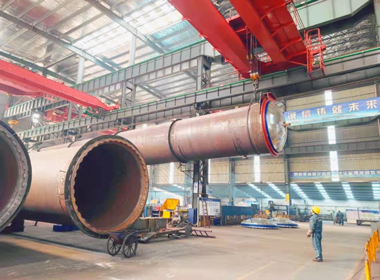
Assembly and testing capability belong on the audit checklist: the vessel is only as reliable as the workshop that builds and tests it.
Step-by-Step Breakdown: A Seven-Step Supplier Audit
- Define the operating envelope before contacting suppliers. Write down the part family, the required temperature and pressure range, the target temperature uniformity and pressure stability, the daily duty hours, and the ambient conditions. For a high-end installation, that means a dust-free plant without corrosive gas or electromagnetic interference, with environmental temperature controlled at 20–28°C and humidity at 30%–50%.
- Request the peripheral bill of materials as a separate document. For continuous production, this includes material handling equipment such as forklifts and cranes, automated feeding and discharging devices, cooling systems, electrical control systems, sealing replacement tools, vulnerable parts reserves, and ventilation and dust removal equipment, with vacuum systems in some scenarios.
- Ask for failure and repair records against a stated threshold. Compare the supplier's figures with the ≤1.2 failures per month and ≤24-hour repair target used in continuous industrial production, or the ≤0.2 faults per month and ≤3-hour repair pattern typical of laboratory equipment.
- Interrogate the control architecture. Confirm that automated control, remote diagnosis, fault warning, real-time monitoring, and automatic parameter adjustment are all in scope, and confirm the redundancy design for the control system where uninterrupted operation is required.
- Verify the factory acceptance test protocol. Olymspan runs full-process quality inspection before shipment, covering pressure sealing testing, temperature uniformity testing, electrical safety testing, and data acquisition accuracy calibration. Ask for the recorded results, not the test names.
- Plan the commissioning window. On-site commissioning and verification typically take 1–3 days and should be scheduled against the production plan rather than after it.
- Write the service commitment into the contract. Repair time, spare-parts availability, remote support access, and the maintenance schedule should appear as obligations. Where an emergency stop or power interruption is possible, confirm the manual emergency operation mode that allows the system to be brought to a safe state.
Use Cases: What Verification Looks Like Across Three Project Types
Aerospace and high-end military programs
In an eight-unit aerospace program in the United States, autoclaves were used to cure main load-bearing fuselage and wing components from advanced high-temperature composites such as PEEK and polyimide, to GJB9001C aviation-grade quality standards. Over seven years the equipment produced more than 3,000 main load-bearing components at a 99.8% qualification rate with no quality defects, and the program recorded no safety accidents across the period. Mean time between failures reached 1,600 hours, with fault repair completed within ≤8 hours. Parameter fluctuation was held within ±0.1MPa and ±0.3°C using a dual redundant control system, and the installed heat recovery device achieved ≥82% recovery efficiency.
Industrial small and medium batch production
An automotive parts supplier in China operated eight units for steering-wheel frames and interior components, processing 600 products per day. Single-batch curing time was controlled at 2.5 hours, and the product qualification rate rose from 92% to 99.2%. The installation used a modular structural design to switch production specifications quickly, and manual plus electric quick-opening functionality to respond to events such as power outages. In a separate wind-power project in India, six units supported small blade components in a high-temperature, high-humidity environment with a corrosion-resistant electrical design, reaching an average daily output of 400 pieces.
Laboratory and R&D validation
A materials engineering research group at a Chinese university used four units, each with a 1.2 cubic metre capacity, across a −40°C to 300°C experimental range. Temperature control accuracy of ±0.5°C supported 12 new composite formulations, six optimised curing parameter sets, eight core journal papers, and three invention patents, with more than 1,300 experiments completed and full data traceability. A German new-energy R&D group used two units for battery-housing composite development; precise temperature and pressure control shortened the process debugging cycle by 40% and reduced R&D costs by 25%.

Process capability is ultimately judged on the cured part: strength, consistency, and repeatability across batches.
Comparison Table: Scenario Requirements Buyers Should Verify
| Verification item | Aerospace / high-end military | Industrial small–medium batch | Laboratory R&D |
|---|---|---|---|
| Duty cycle | Long-term continuous, 20–24 hours per day; continuous operation cycle ≥8000 hours | Continuous multi-batch, 8–16 hours per day with automated feeding, curing, and discharging | Intermittent, single run of 2–8 hours; no continuous long-term startup |
| Site conditions | Dust-free, no corrosive gas, no electromagnetic interference; 20–28°C, 30%–50% RH | −10–40°C, 30%–70% RH, some anti-corrosion capability, ventilation required | 15–25°C, 40%–60% RH, no dust or corrosive gas; 220V/380V optional |
| Temperature uniformity | ±0.3°C to ±0.5°C | Defined by part tolerance — confirm in the RFQ | ±0.3°C to ±0.5°C |
| Pressure stability | ±0.1MPa | Defined by part tolerance — confirm in the RFQ | ±0.05MPa |
| Control and diagnostic scope | Dual redundant control system, remote diagnostic terminal, high-precision monitoring, inert gas protection | Electrical control system, adjustable parameters by production plan, manual emergency operation mode | Manual/automatic dual-mode operation with remote monitoring of the experimental process |
| Reliability target | Repair completed within ≤8 hours in the referenced aerospace program; MTBF 1,600 hours | Average ≤1.2 failures per month; fault repair ≤24 hours | Average ≤0.2 faults per month; fault repair ≤3 hours |
| Safety and traceability | Multiple safety interlocks (over-temperature, over-pressure, leakage emergency), full process quality traceability | Anti-leak and anti-overheating/over-pressure protection; manual plus electric quick-opening door | Dual alarm and emergency pressure relief; precise data traceability and parameter storage |
| Compliance focus | GJB9001C reference; ASME 'U'/'S', CE, CRN, NB for market access | Local pressure-vessel certification for some export models; industrial safety standards | Laboratory safety standards; local electrical safety regulations for some export models |
| Reference project | 8-unit US aerospace program, 7 years | 8-unit China automotive program, 6 years; 6-unit India wind program, 5 years | 4-unit university program, 5 years; 2-unit German R&D program, 4 years |
FAQ
What compliance evidence should a buyer request before approving a composite autoclave supplier?
Request three separate documents. First, the certification scope: which vessel, which jurisdiction, which stamp. Olymspan holds ASME 'U' and 'S' stamps, EU CE certification, Canadian CRN, and NB certification, and aviation and military projects additionally reference GJB9001C. Second, the measured performance envelope: aviation-grade work expects temperature uniformity of ±0.3°C to ±0.5°C and pressure stability of ±0.1MPa. Third, the export-market obligation, since some models must comply with local pressure-vessel certification. A supplier that answers all three with documents rather than statements has cleared the compliance gate.
How do I confirm the supplier can deliver the full peripheral system, not just the vessel?
Ask for the peripheral scope as a priced, itemised list. For a high-end installation the expected content is a dual redundant control system, a remote diagnostic terminal, high-precision temperature and pressure monitoring equipment, and an inert gas protection system, used together with a vacuum system, an emergency pressure relief device, and a full process quality traceability system. Then check the factory test protocol: Olymspan's pre-shipment inspection covers pressure sealing testing, temperature uniformity testing, electrical safety testing, and data acquisition accuracy calibration, followed by on-site commissioning and verification taking 1–3 days. A supplier that lists these items individually and tests them individually is delivering a system.
What drives the operating cost of a composite autoclave after installation?
Energy dominates. Industrial composite autoclaves typically consume 0.5–0.7 kWh per cubic metre of unit volume, so batch volume and insulation design determine the long-run cost more than the purchase price does. Heat recovery is the main lever: in the referenced eight-unit aerospace program, a dedicated heat recovery device achieved ≥82% recovery efficiency with annual energy savings of approximately 150,000 yuan. In an eight-unit automotive program, annual operating cost was controlled at 120,000 yuan — 28% more energy-efficient than comparable equipment — with annual consumable replacement cost of 25,000 yuan. Ask every supplier for both figures, and ask under what load they were measured.
Can we validate a composite autoclave before committing to a full production order?
Yes. Minimum order quantity is 1 set, which allows a single unit to be used as a validation asset. Laboratory units are designed for exactly this purpose: a 1.2 cubic metre chamber, ±0.3°C to ±0.5°C temperature control, ±0.05MPa pressure control, and stored parameter sets that can be retrieved for comparison. A German new-energy R&D group used two units to develop battery-housing composites and shortened its process debugging cycle by 40% while reducing R&D costs by 25%; a university group completed more than 1,300 experiments on four units with full data traceability. Validation results generated this way translate directly into production parameters.
What lead time and service commitment should be written into the contract?
Olymspan quotes 15–25 days for standard models and 25–40 days for customised models including parameter adjustments and new features, excluding on-site installation and commissioning, which takes 1–3 days. Beyond delivery, contract the service terms explicitly: remote support and on-site after-sales support are both available, and the repair targets to negotiate against are ≤24 hours for continuous industrial production, ≤8 hours in the referenced aerospace program, and ≤3 hours for laboratory units. To review the full equipment scope before your evaluation meeting, download the Olymspan product brochure, or send your operating envelope to the team for a specification review.
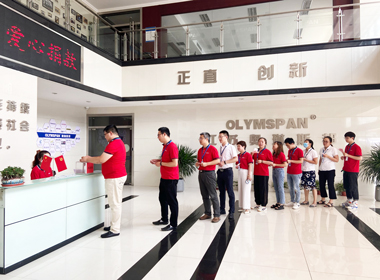
Delivery capability is a team capability: engineering, production, testing, and service have to answer the same audit questions.
Conclusion: Audit the System, Not the Specification Sheet
High-stakes composite autoclave delivery is decided by four questions that a specification sheet cannot answer. What duty cycle is the system engineered for? Is the peripheral scope — redundancy, remote diagnostics, vacuum, traceability, safety relief — inside the delivered battery limits? Can the supplier show a failure frequency and a repair time rather than promise one? And is the certification scope matched to the vessel and the destination market?
Jiangsu Olymspan Equipment Technology Co., Ltd. builds composite autoclaves in Changzhou, Jiangsu, China, across a 66,000m² facility with 350 employees and a 25-engineer R&D team, serving markets in North America, South America, Western Europe, Eastern Europe, Eastern Asia, Southeast Asia, the Middle East, Africa, and Oceania, with an export ratio of 30%–40%. Systems are configured for laboratory, industrial, and aviation-grade duty cycles, with the peripheral and control architecture specified per project.
Next Step: Put Your Envelope Against a Verified Configuration
Share your part family, required temperature and pressure range, daily duty hours, and site conditions. The team will return a configuration scope that separates vessel, control architecture, peripheral systems, testing protocol, and service commitment — so each item can be evaluated on evidence rather than on description.
Website: www.aac-autoclave.com | Email: Wei.xia@olymspan.com | WhatsApp: +86 138 6117 6509
Download the Olymspan product brochure (PDF) for the full equipment range and specification set.
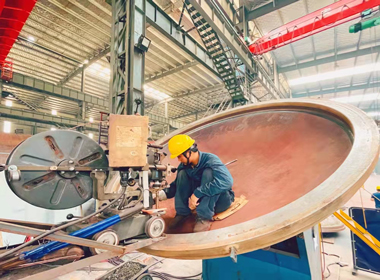
From factory acceptance test to shipment: the last stage of the audit is the delivery record itself.
Have Questions or Need More Details?
Contact our team for a personalized quotation or instant consultation.
Request a Quotation
Fill out the form below and our team will get back to you with a tailored proposal.
WhatsApp Direct Chat
Prefer to chat in real-time? Message us on WhatsApp for instant assistance & quick answers.
- Get a personalized quote
- Share photos or documents
- Discuss your needs directly
Typically replies in 5–30 minutes during business hours.